
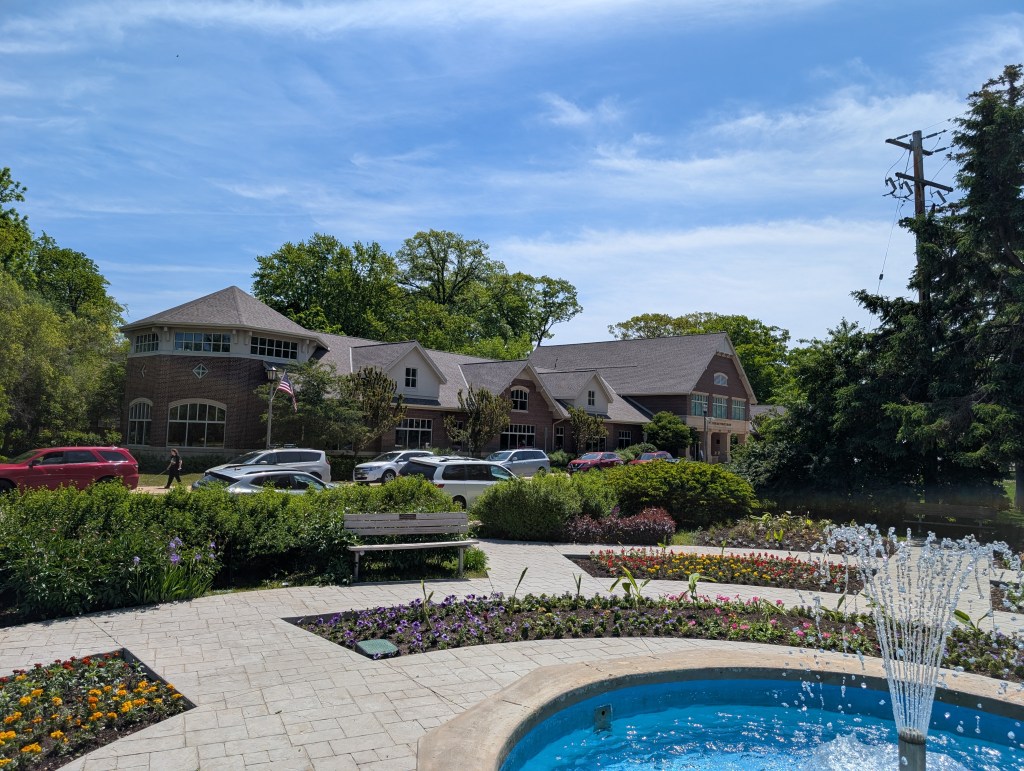
Recently, Library Director Nyama Reed and Library Board Member Nikki DeGuire presented the Public Library’s 2026-2030 Strategic Plan to the Village Board. One main takeaway: the library is exceptionally good at what it does, and that excellence may be starting to strain the seams.
The Whitefish Bay Library is a community institution that is, by nearly every available metric, outperforming its peers and doing so with a staff that is working, in the Director’s own words, past its capacity.
By the Numbers: A Well-Used Library
The statistics should make any community member proud. While the state average for library card holders is 22% of residents, 46% of Whitefish Bay residents hold an active card. The library averaged 500 visitors per day in 2025. That works out to 11 visits per resident annually, nearly double the Milwaukee County Federated Library System (MCFLS) average of six. It ranks as the most visited library per resident within the MCFLS, and a vendor the library previously worked with told them they had the highest patron engagement rate of any library, suburban, rural, or urban, that the vendor had encountered nationwide.

With one of the highest percentages of residents under 18 years of age of any municipality in Wisconsin, it may not be surprising that the library circulates more children’s material than any other library in Milwaukee County and ranks among the top five in the state.
The Whitefish Bay Library also holds the distinction of having the third-lowest cost per circulation of any library in Wisconsin. This is a strong nod to yet another institution in the Village that operates at an efficient use of taxpayer dollars when compared to peers.
An impressive 37% of the library’s circulation now comes from non-residents, up from 31% just a year ago, which generates additional revenue through the MCFLS’s member reserve fund. That jump is partly explained by the fact that neighboring libraries, including North Shore and Brown Deer, have reduced hours significantly to manage their own budgets, closing on Sundays year-round.
The Flip Side: Understaffed for the Demand
The challenge embedded in all of this success is a staffing gap that the data makes hard to ignore. Using MCFLS benchmarks and adjusting for usage levels, Reed shared that when comparing items circulated by the library to staff, the Whitefish Bay Library circulates 60% more material per staff member than peer libraries. She calculated that if the library was staffed at the same rate as peer libraries, there would theoretically be 17 full-time equivalent staff members compared with the current 11.

A staff survey conducted as part of the planning process reflected a team that genuinely loves its work and takes pride in the library’s community role, but surfaced real frustration: a reliance on part-time positions and where turnover can be a chronic problem.
The practical effect of the current set up is that department heads spend significant time on operational and administrative duties, covering desks, training new hires and filling gaps, rather than on strategic and program work that the library’s patrons may actually desire.
What Patrons Are Asking For
A recent library community survey drew 803 respondents and the feedback was overwhelmingly positive: 97% of open-ended responses were positive or constructive. The top requests from residents were shorter wait times for popular titles, more study rooms, and more digital and physical formats.
The study room demand is real and growing. The library frequently maintains a waitlist for study rooms, particularly after school. High schoolers working on group projects, tutors meeting with students, adults needing a quiet space for a job interview or a focused work session – demand consistently exceeds supply. The library has identified a potential solution: converting staff offices behind the reference desk into study rooms (which may yield three to five additional rooms), and relocating staff workspace to what is currently an underutilized back-processing area.
Interestingly, 19% of survey respondents expressed interest in non-English materials, particularly German and Spanish.
Facilities: Beautiful, Well-Loved, and Starting to Show Its Age
The library building’s front doors have opened more than eight million times in the past 24 years as estimated by Reed, dating back to the remodel completed in 2002. The building is in good structural shape thanks to a few recent village investments: a new roof, fire suppression upgrades, an upcoming boiler replacement, and the solar panel installation recently completed. But interior needs have accumulated. Reed shared the most pressing: the additional study rooms discussed above, improved private workspace for staff (the current staff offices have no doors, making focused work nearly impossible), and a second-floor public restroom. Currently, the only restroom on the second floor is a staff-only facility accessible through the break room.
The Path Forward
The numbers tell a clear story: Whitefish Bay residents love their books and seemingly are getting exceptional value from their public library. The strategic plan ahead is about making sure the institution can keep delivering on that promise for the next generation and beyond.


What do you think, Bay Neighbor?