Category: Community

  • Whitefish Bay’s Vibrant Block Party Culture

    Whitefish Bay’s Vibrant Block Party Culture

    Few things say “summer in Whitefish Bay” quite like a block party. Closed-off streets, folding chairs, kids on bikes and scooters weaving between card tables. It’s one of the more charming features of life in a village where most people actually know and interact with their neighbors.

    How Popular Are Block Parties Here?

    Very. Village Hall has issued between 127 and 138 block party permits annually over the past several years:

    • 2021: 138
    • 2022: 131
    • 2023: 134
    • 2024: 128
    • 2025: 127
    • 2026: 58 (and counting)

    With 58 permits already issued so far in 2026 and peak season still ahead, the summer is just getting started. While summer dominates the calendar, a handful of requests come through in spring and fall each year — proof that Whitefish Bay residents don’t always let a little cool weather get between them and a good excuse to throw a party.

    The Village’s Biggest Block Party

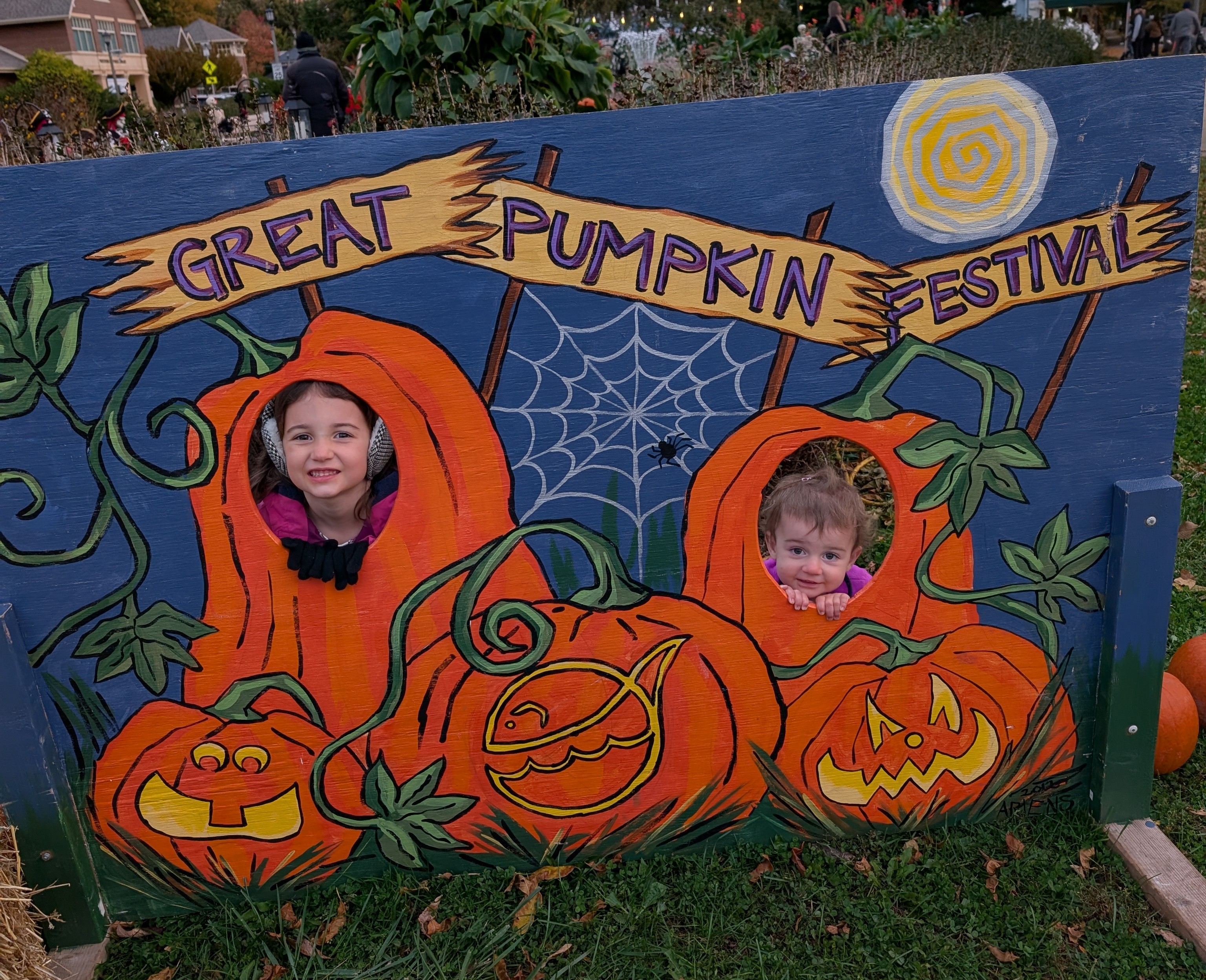
    It’s worth acknowledging the largest block party that I can think of: Sounds of Summer, put on annually by the Whitefish Bay Civic Foundation on Silver Spring. The 4th of July and the Great Pumpkin Festival feel more like “Fests” to me than block parties, so I’ll give Sounds of Summer the nod, and each of these fabulous events are put on thanks to our Civic Foundation.

    Typically, Silver Spring is closed from Hollywood Avenue to Santa Monica Boulevard. Live music fills the street, a food tent is set up, and the Civic Foundation handles the drinks.

    Sounds of Summer is a good reminder of what a closed street and a little organization can do for a community. Your block party probably won’t draw as many people, but the spirit is the same. This year it will be held on August 15th from 6 to 10pm.

    A Block Party Tradition Worth Knowing

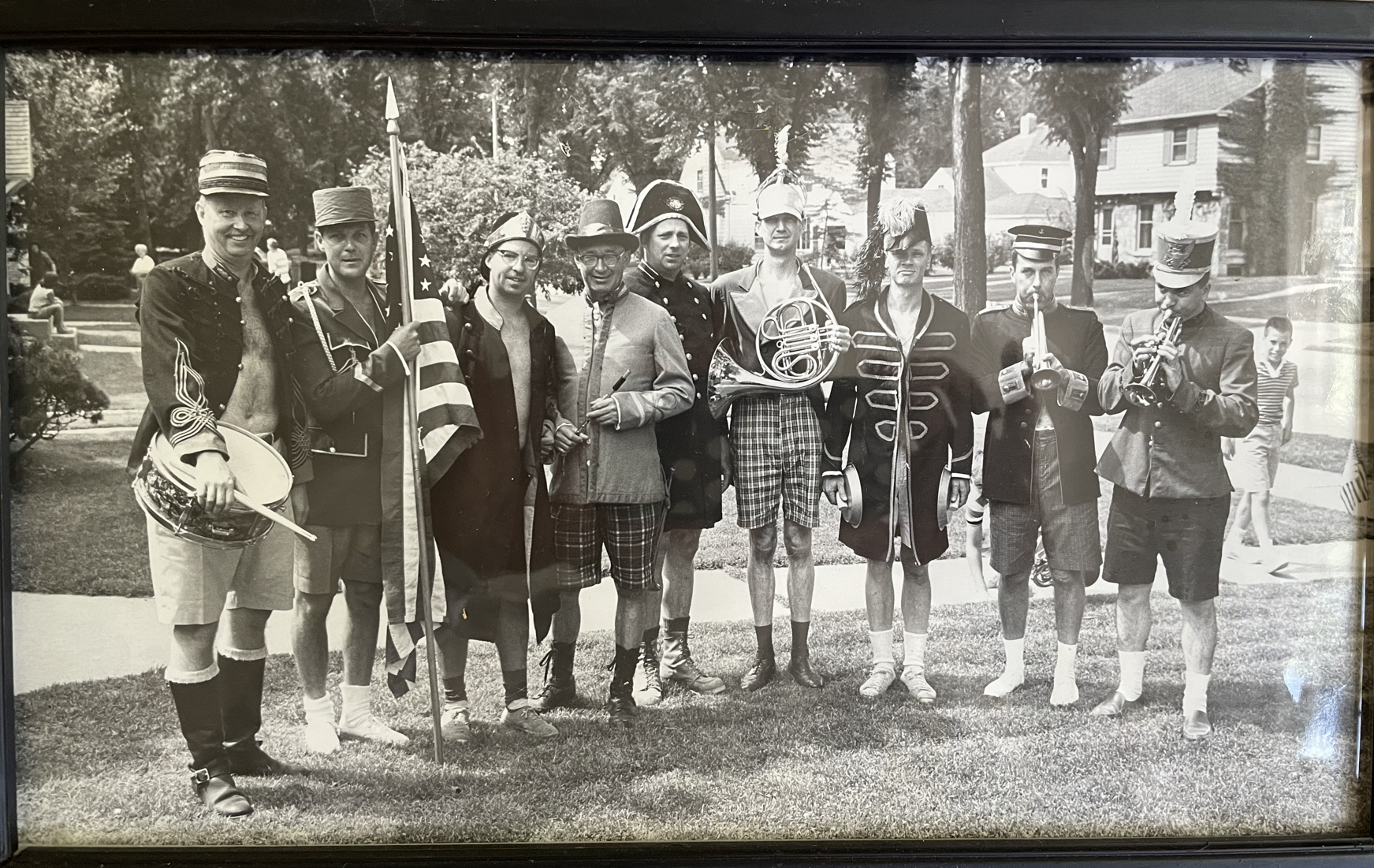
    While Sounds of Summer may be the village’s biggest, it isn’t the most storied. That distinction likely belongs to the Sheffield Block Party, an annual Fourth of July tradition on the 4800 block of Sheffield Avenue now in its 73rd year. What started years ago when a few friends decided they wanted to celebrate Independence Day together has grown into a multi-generational neighborhood institution.

    There used to be a baseball game that has been replaced with a kickball game, but otherwise the party still flows similarly in the 2020s to how things were in the 1950s when it was started. The day is meticulously scheduled and includes a parade, plenty of food and drinks and an egg-throwing contest.

    Even Johnsonville Brats has taken note of the party and last year sent 250 (or was it 249 for the 249th birthday of the US?) brats to the Sheffield crew. We were told there were many left over!

    COVID wasn’t able to stop at least some of the festivities of this block party. A modified version was held including masks. Bessie joined in on the safe theme.

    How Do You Get a Permit?

    The village makes it relatively easy. You can submit a Block Party Request online here. Make sure your request is submitted 30 days before the scheduled date. 

    The Rules

    Some streets are off-limits. The village does not allow neighborhood block parties on its busier thoroughfares, including: Silver Spring, Santa Monica, Hampton, Oakland Ave south of Hampton, Lake Drive, and Lydell Avenue south of the cemetery.

    The whole block or nothing. The Police Department requires full block closures — no partial closures. This is the nudge you need to finally introduce yourself to the neighbors at the far end of the street!

    One block party request per household per year.

    Village Trick-or-Treat night. No block parties allowed that evening. The Village Board voted back in 2015 to end Trick-or-Treat block parties at the recommendation of the then Police Chief Michael Young for safety reasons. In 2014, there had been 19 permits for Trick-or-Treat block parties.

    Fourth of July. Parties are allowed, though you will have to supply your own barricades.

    A Note on Being a Good Neighbor

    As a PSA, our Police Department requests that block party hosts be considerate of neighbors when it comes to music volume. Not everyone on the block is necessarily a willing participant in your six-hour playlist. They also ask that the street be fully reopened and all items removed from the roadway by the time stated on the permit.

    So, What Are You Waiting For?

    With dozens of block parties already on the calendar and the heart of summer still ahead, Whitefish Bay’s streets are going to be busy in the best possible way. If your block hasn’t had one in a while, or ever, this might be the year to change that. Submit your request here.

    Any other cool block party related traditions? I’d love to hear about them in the comments below!

  • World Cup Final Watch Party Proposed for Klode Park

    World Cup Final Watch Party Proposed for Klode Park

    With Summer upon us, Village Board meetings occur less frequently than during the rest of the year. This Monday’s meeting includes discussions on exciting topics like: Lake Drive school zone signage, Sendik’s parking lot details, renewal of alcohol licenses, and potential library staffing additions. But one item caught our eye – a proposal from The Whitefish Bay Civic Foundation for a World Cup Finals Viewing Party to be held at Klode Park.

    The Civic Foundation has submitted a special event permit application to hold a viewing party with an anticipated attendance of as many as 3,000 people on Sunday, July 19th at Klode. If approved, they will team up with Three Lions Pub in Shorewood to put on the event. Both The Civic Foundation and Three Lions have significant experience hosting large events – The Civic Foundation most notably with the village’s 4th of July celebration and Three Lions with similar large soccer watch parties in Shorewood. In prior years, Oakland Avenue has been shut down for World Cup watch parties hosted by Three Lions, including in 2018 and 2022. If you’ve driven down Oakland in the past year, it’s probably easy to guess why it won’t happen in that location this time around (construction).

    The proposal includes a potential layout with a jumbo screen facing East towards the lake along Lake Drive, food trucks, a DJ, and beer stations scattered throughout the viewing area. If the proposal is approved as is, the DJ would run from noon to 2pm, with the World Cup finals match kicking off at 2pm on the 19th of July. Five professional security guards would handle crowd control and soft screening at the perimeter, and the Foundation would be providing its own crossing guard at Lake Drive and Belle Avenue. 

    Keep your vuvuzelas and other artificial noisemakers at home as those would be prohibited!

    The Village Board will discuss and consider the proposal at Monday’s 6pm meeting.

  • Two Bays, One Name: The Shared Identity of Wisconsin’s Whitefish Bays

    Two Bays, One Name: The Shared Identity of Wisconsin’s Whitefish Bays

    Wisconsin has two communities called Whitefish Bay. One is our leafy lakeside village of nearly 14,000 people just north of Milwaukee, with coffee shops on Silver Spring, kids walking and biking to school (for outsiders, we have no school buses here!) and a small town feel with easy access to a major metro area. The other is an unincorporated community on a quiet stretch of Lake Michigan tucked into the Town of Sevastopol in Door County, known more for a scenic rustic road and the Whitefish Dunes State Park. Both have property values that may make your eyes water and both owe their name to the same fish. And that fish, it turns out, is in serious trouble.

    The Whitefish

    The story of both Whitefish Bays starts the same way: with commercial fishermen hauling nets full of lake whitefish from remarkably productive waters.

    In Milwaukee County, early settlers set up a commercial fishing operation in the adjacent bay of Lake Michigan, and the frequency with which they caught whitefish there suggested a name for the community. The name stuck, and when residents incorporated as a village in 1892 — primarily to start their own school district after the Town of Milwaukee declined villagers’ request to build a school closer to home — they kept it. That made Whitefish Bay Milwaukee County’s very first incorporated village.

    Up in Door County, the story is similar. As early as 1838, Whitefish Bay was mentioned in ships’ log books, with a schooner named the Gazelle referring to it as Fisherman’s Bay. The area had been a fishing ground long before European settlers arrived. The book Door County’s Emerald Treasure explains that Native Americans called the place Ah-Quas-He-Ma-Ganing, meaning “save our lives,” a name that speaks to how vital the bay was for their survival. 

    From the WFB Buzz Family Archives. Fishermen in Whitefish Bay, Door County

    So which came first? With one village incorporated and the other unincorporated, there may not actually be a knowable answer! The 1881 book History of Door County shares that Whitefish Bay Door County held one of the earliest established fishing settlements in the state dating back to the 1830s. So Door County’s Whitefish Bay may have a deeper documented fishing history, appearing in maritime records well before Milwaukee County’s village was even incorporated. But both names grew organically from the same source: waters so full of whitefish that no one needed to think very hard about what to call the place.

    The Other Whitefish Bay You’ve Heard of — Even If You Didn’t Know It

    There’s a third Whitefish Bay in the region that deserves a mention, and there’s a good chance you’ve heard it referenced without realizing it. Whitefish Bay on Lake Superior straddles the Michigan and Ontario border and was immortalized in Gordon Lightfoot’s 1976 ballad The Wreck of the Edmund Fitzgerald. The song recounts the 1975 sinking of the SS Edmund Fitzgerald, which went down in a violent Lake Superior storm with 29 men aboard. The lyric “does anyone know where the love of God goes / when the waves turn the minutes to hours / The searchers all say they’d have made Whitefish Bay / if they’d put fifteen more miles behind her” refers to the ship’s desperate attempt to reach the shelter of Whitefish Bay before the storm overtook her. She never made it.

    The Fish That Named Two Towns Is Struggling

    Here’s the uncomfortable footnote to all of this: the whitefish that gave both communities their names has been quietly disappearing from the very waters where it once thrived.

    Commercial Fishing Harvest for Lake Whitefish in WI waters of Lake Michigan, 1990-2024. From WI DNR

    The commercial harvest of lake whitefish in Wisconsin waters of Lake Michigan has dropped from a peak of about 1.7 million pounds in 1999 to less than 200,000 pounds in 2024, a decline of nearly 90 percent. Todd Stuth, owner and operator of Baileys Harbor Fish Company shared with Wisconsin Public Radio that invasive zebra and quagga mussels are likely the greatest driver in the decline. The filter-feeding mussels have disrupted the food chain by consuming the food that larval whitefish rely on to survive, and without that replenishment of young fish, the population has seen a steep and continuous decline. There is some good news as the Green Bay whitefish population has seen a meaningful recovery since the early 2000s, offering a bright spot and a potential model for what restoration might look like elsewhere. 

    Unfortunately, it’s safe to say that we will not be eating a locally caught whitefish fish fry or boil at Jack Pandl’s anytime soon.

    Both Whitefish Bays carry a name that alluded to the importance of the fish to the people who first resided in the areas. Whether that name will mean anything to the waters themselves in another generation is a question that scientists, fishers, and regulators are hoping to answer.

  • Meet the Dad Behind Dad O’Clock, WFB’s Newest Happy Hour Series at The Argo

    Meet the Dad Behind Dad O’Clock, WFB’s Newest Happy Hour Series at The Argo

    Erik Moser, our Whitefish Bay neighbor, husband, dad of two, and self-described high-pressure B2B sales veteran, had a health scare. Not a physical one, but a mental one. He says he was “bursting at the seams carrying 1,000 pounds.” The autopilot had kicked in: bills, investments, a nagging feeling of not doing enough at work. The kind of slow burn that doesn’t show up in a blood test but quietly takes a toll.

    “I started to feel myself turning into this autopilot dad around my family,” he says. The further he dug into how to actually improve his wellbeing, the more he noticed something missing, not just in his own life, but potentially also in the community around him.

    “We’ve lived in Whitefish Bay for seven years. My next door neighbors on both sides are great, but go two doors down and they might as well live on Mars.”

    That observation, equal parts funny and a little sad, is what planted the seed for Dad O’Clock, a biweekly happy hour for dads of all kinds launching Tuesday, May 13th from 4 to 6pm at The Argo.

    Old dads. New dads. Tall dads. Short dads. Cat dads. Dog dads.

    (Yes, he Dr. Seuss’d his original announcement. No, he is not sorry about it.)

    The premise is disarmingly simple: dads meeting dads, no agenda, no networking pitch, no ulterior motive. Just a bar stool, a beverage, and someone who might actually want to hear how your week went. 

    Conversation topics are flexible. Sports? Wisconsin everything, plus Tampa Bay Lightning hockey. Kids? his daughters are named Marley and Bowie, after Bob Marley and David Bowie respectively, which tells you something about the guy. Local politics? Erik has strong feelings about leaf-gate and Mother Nature’s decision to snow before the leaves were collected. He is not over it.

    What he’s really after, though, is something harder to put on a flyer. He talks about watching parents at the park, heads down on their phones while their kids play, and the irony of adults lecturing children about screen time while doing the exact same thing. He talks about how the digital age keeps making it easier to stay isolated, and how a simple “hi” from a stranger somehow feels harder than it used to.

    “People are more than happy to chat if you just say hi,” he says. “But for so many, saying hi can feel too uncomfortable, too awkward, or just not worth it. That’s where I want to step in: hey neighbor, let me buy you a drink and I’d love to hear your story.”

    For men, the cultural pressure to appear fine has always been louder than the invitation to admit they’re not. A Today Show commissioned study showed that 49% of men felt more depressed than they would admit to people in their lives.

    Erik has hosted plenty of events professionally, rooftop gatherings in New York, Chicago, and Miami. But those, he’ll tell you, were always money-motivated. Dad O’Clock is the first thing he’s done in a long time purely for himself. For his own wellbeing. For his community.

    And Erik is already thinking about the moms. He’d love to see someone step up to host a counterpart happy hour on a different day of the week. “Battle of the sexes, Whitefish Bay. Bravo TV, here we come.”

    He signs off as “Tootie Butt,” a nickname he says he earned through integrity, according to his daughter Marley. Whether that story holds up under scrutiny is a matter for another happy hour conversation.

    Dad O’Clock kicks off May 13th at 4pm at The Argo.