
Author: WFBBuzz

  • Recapping This Week’s School Board Meeting

    Recapping This Week’s School Board Meeting

    When we last checked in with the School Board, the path toward a November referendum was coming into focus. This week’s meeting shed more light on the coming details, and specifically, what next Tuesday’s community focus groups may actually look like. Additionally, the board discussed what the Village has requested from the district on the Armory Memorial if they create a formal memorandum of understanding, and whether a community survey is happening.

    To view Superintendent Dr. Jamie Foeckler’s memo that outlined much of the referendum discussion, click here (loaded to Dropbox, for those not fond of Boarddocs). 

    Here’s what was debated from my perspective.

    The Village Wants an Answer: Building or Green Space?

    Last time, we talked about how the Village and the School District wanted to formalize their potential transfer of property (the Village owns the Armory Park land) should the School District decide to move forward with a plan for a new middle school on the site. Architect Nicholas Kent from PRA walked through what a memorial could look like if a new middle school were built at Armory Park. He was careful to stress that there are no designs at this point, but the concept identified three exterior opportunities:

    • The northeast corner facing Lake Drive, where the memorial sits today, as a high-visibility anchor that could incorporate elements of the existing memorial
    • The east face of the building along Ardmore, which could extend the memorial experience southward
    • The south face overlooking the playfield, a future potential gathering spot for events like the well attended Memorial Day ceremonies

    The Village would need the district to choose, for purposes of the memorandum of understanding, whether the memorial would be integrated into the new building or rebuilt on the green space that would open up at the current middle school site. And for all of this to align with the timing of a November referendum, it would likely need that answer by the end of August.

    Several board members weren’t ready to commit. One pointed out that the Armory has been at least a small part of educating Whitefish Bay students since 1932, and that the memorial group and veteran community haven’t yet weighed in. The suggestion was even floated that the answer might be “both”: a prominent memorial at the new building plus a garden space at the vacated middle school site.

    Focus Group Format: Set for Next Tuesday

    The first focus group is June 16, with a second on July 14. About 100 residents have signed up so far (there is still time to sign up). The potential structure:

    Tables of six to seven people, each with a moderator/note-taker from the administrative team or partner groups.

    After considerable wordsmithing, the board seemed to land on three questions for discussion:

    1. Please share why you voted the way you did on the referendum question. (Non-voters will be asked to share their perspectives.)
    2. What stands out to you as the greatest needs and constraints across our facilities?
    3. Please share your thoughts on tax impact tolerance.

    The board was clear the tax tolerance discussion should stay at the level of an overall number, not get tied to specific projects. A reference sheet recapping the April referendum projects may also be on each table, deliberately framed as what was proposed, not what will be proposed. As one board member put it, the projects may change but “the needs are constant.”

    Running beneath the question-wording debate was a familiar tension: is the board open to completely new proposals, or is this process headed toward a relative do-over of the April referendum with a smaller price tag? One member stressed that the sessions should be about collecting community feedback before the board comes up with a referendum question — not that the board has a question in mind that they are asking people to give feedback on. Others were equally insistent that nothing fundamental has changed since the April vote: the needs identified six months ago are the same needs today. 

    The Survey is Back on the Table

    The board supported moving forward with a community survey, this time through the Donovan Group, the communications firm hired last month. The board president was blunt about the reasoning: the focus groups will reach less than a tenth of the community, and quantitative data is needed alongside the qualitative.

    The timeline is tight. The Donovan Group will provide a draft within days, board members will submit individual feedback by Monday, and the board needs to approve a final version at its June 17 meeting. The survey will then run the full month of July, with a postcard and QR code going out to the community.

    Notably, this process will differ from the earlier survey used before the April referendum. It will be web-based, every resident in a household can take it (a point of confusion last time), and paper copies will be available if needed.

    Enrollment Watch

    The School Board also discussed new enrollment projections for next year. There has been significant discussion about the numbers in the past in the context of investing in the distinct’s future needs. The overall projected numbers are down from this school year, but still ahead of the projected numbers from the Community Change & Projections Report in 2025. 

    Total enrollment across the four schools is projected to be 2,837 students for the 2026-2027 school year. The most recent numbers from January were 2,896 students. The CC&P Report had projected a drop to 2,783 students for 2027.   

    The report had also concluded that nearly 100% of the recent historical drop in enrollment for Whitefish Bay was due to 1) the sunsetting of the Chapter 220 program due to changes at the state level and 2) the choice to not take any students through the open enrollment option from outside of the district. Chapter 220 enrollment next year will decrease from 37 students to 22 and will drop to 0 in two years.

    The calendar gets tight from here: The first focus group is Tuesday, June 16th, with a second on July 14th. The survey window would last the month of July with results landing at the August 12th board meeting, where a draft referendum question would need to take shape, before the August 25th statutory deadline.

  • A Shooting in Glendale Puts Short Term Rentals in the Spotlight. Here’s Where the Issue Stands in Whitefish Bay.

    A Shooting in Glendale Puts Short Term Rentals in the Spotlight. Here’s Where the Issue Stands in Whitefish Bay.

    A 22-year-old man was shot at a short term vacation rental on the 1000 block of W. Riverview Dr. in Glendale in May. The same house reportedly saw a guest drown in the Milwaukee River in 2024. At this week’s common council meeting, Glendale took a hard look at how it regulates short term rentals.  While Whitefish Bay has not had the same level of headline grabbing issues with short term rentals, our village board took similar action in November of last year to regulate those types of rentals more closely. 

    How It Started in Whitefish Bay

    A group of neighbors on the 4700 block of North Larkin Street spent the better part of 2025 organizing, documenting their concerns, showing up to village board meetings, and collaborating with village staff. The result was the unanimous passage of an ordinance at the November 17th village board meeting — Whitefish Bay’s first comprehensive regulatory framework for short term rentals.

    The spark came from a single Airbnb that opened on North Larkin in January 2025 and, according to neighbors, never stopped being rented. Residents described a revolving door of renters, a property manager who wouldn’t respond to anyone, trash going weeks without collection, and a general erosion of the block’s stability. They brought their concerns to village leadership, who directed staff to draft an ordinance.

    What staff found when they started looking at the time: there were 17 active short term rental properties in Whitefish Bay and more than 70% of them were operating without a license from the North Shore Health Department. The police department stated that they had received four calls over the prior year across those properties (each call was for a separate/distinct house – in other words, no single house incurred multiple calls).

    What the Ordinance Does

    Village staff drafted rules requiring anyone operating a short term rental to obtain an annual village license for $300. The application requires a Wisconsin State Department of Revenue sellers permit, a North Shore Health Department permit, proof of short term rental insurance, and notification of all property owners within 200 feet of the property.

    The key restriction implemented is a 7-day minimum stay, the most restrictive the village is legally permitted to impose under Wisconsin state statute, and an occupancy cap of two guests per bedroom plus two additional occupants. Property managers must respond to complaints within 12 hours of an outreach. Three violations from any combination of police, code compliance, or the health department within a 365-day period triggers license revocation. Operating without a license at all exposes owners to daily fines.

    Wisconsin’s Complicated Legal Landscape

    One reason Whitefish Bay’s board was so focused on threading a legal needle: municipalities across Wisconsin (and the country) that have tried to crack down on short term rentals have found themselves sued.

    In July 2025, the Wisconsin Realtors Association won a court case decided by the Wisconsin Court of Appeals. The court struck down Neenah’s ordinance requiring short term rental properties to be the primary residence of the applicant, ruling it conflicted with Wisconsin’s right-to-rent law. In another 2025 case, the Village of Summit had attempted to regulate short term rentals through general police powers rather than through its zoning code — and lost on procedural grounds.

    Fast forward to 2026

    The Village shared with the WFB Buzz that three licenses have been issued for short term rentals to date. There are an additional two applications that are pending approval as those two locations work to obtain their State Department of Revenue and North Shore Health Department permits. No applications have been rejected to date. 

    A Snapshot of an Airbnb Search of Available Rentals from June 2026

    When performing an [admittedly very unscientific] experiment myself, 13 properties showed up in the village limits of Whitefish Bay on Airbnb (using no parameters on number of guests, length of stay, or period of stay). Only 1 property showed up on VRBO, which was a duplicate of a property also visible on Airbnb. When filtering by weekend availability, four properties showed up, which would not align with the minimum 7 day ordinance. 

    The Village also shared that they have received written and/or verbal confirmation from other property owners stating they are not actively operating as a short term rental despite still showing up in the booking platforms. While ironing out the compliance details as the ordinance is still in its infancy, the Village will likely rely on information displayed in the online booking platforms rather than those written/verbal confirmations going forward as an indication of a rental being operational. 

    Raw Emotions Shown

    Similar to the Whitefish Bay board discussions on the topic last year, the Glendale Common Council was largely sympathetic to the cause of residents hoping for stronger regulation of short term rentals in Monday’s meeting. The ordinance used similar language to that used in Whitefish Bay’s and passed 4-2. 

    Emotions were raw in the Glendale meeting and from what I could see watching online, one individual was removed from the meeting by police after repeated outbursts. For context, no one I spoke with in our village could recall needing to remove an attendee at a Whitefish Bay meeting in at least the past decade!

    With three licenses issued, two pending and at least 13 listings apparently live, the gap between the ordinance on paper and the rentals in practice will be something to watch in 2026.

  • Slowing Down Lake Drive: Whitefish Bay Unveils Traffic Calming Concepts for Five Intersections

    Slowing Down Lake Drive: Whitefish Bay Unveils Traffic Calming Concepts for Five Intersections

    If you’ve ever felt like traffic on Lake Drive moves too fast (and I’m sure there are those of you who think it moves too slow!) through Whitefish Bay, village leadership would seem to agree with you, and Monday’s Public Works Committee meeting includes recommendations on current proposals to calm traffic.

    The committee meets at 5:30 p.m. on Monday to review conceptual designs and cost estimates for traffic calming “gateway” treatments at five Lake Drive intersections, developed by engineering firm raSmith. The concepts are part of a broader push to secure federal grant funding and improve pedestrian and cyclist safety along the village’s busiest and highest-speed corridor.

    The Five Locations

    The proposed gateway treatments target the following intersections along Lake Drive:

    • Lake Drive & Glendale Avenue
    • Lake Drive & Hampton Road
    • Lake Drive & Circle Drive
    • Lake Drive & Monrovia Avenue
    • Lake Drive & School Road

    Each location would receive some combination of raised crosswalks, raised and traversable medians with landscaping, curb and gutter improvements, improved pedestrian ramps, and bike lane delineation. The Glendale and School Road locations are proposed to include decorative gateway signs, marking the village’s entries.

    The Price Tag

    Milwaukee County has applied for federal grant money, a portion of which would be dedicated to Whitefish Bay’s project. The county expects to hear back on the application’s status by fall 2026, with projects anticipated for construction between 2028 and 2030. The total estimated project cost across all five locations is $3 million in 2030 dollars (the anticipated construction window). If the federal grant is awarded, $2.3 million would be eligible for participation in federal grant reimbursement, with the additional $764,000 completely locally funded, including utility relocation, water main replacement, and light pole relocations that don’t qualify under the grant program.

    Try It Before You Build It

    One notable element of the village’s approach: staff is recommending that the conceptual designs also be used to set up temporary traffic calming features using delineators at the proposed locations before any permanent construction begins. The idea is to give residents and the village a trial period to observe real-world effects, gather feedback, and refine the final designs before committing to the full build. You have probably noticed the same approach in the village around town – at the high school on Marlborough and Colfax, on the 100 block of Lake View leading into Bayshore, and on Santa Monica outside St. Monica School.

    Also on the Agenda: New School Zone Signs on Lake Drive

    A second item on the agenda addresses the overhead school zone signs on Lake Drive near Richards Elementary School. The existing signs have been non-functional for years, with broken lights, outdated technology, and electrical connections that are no longer working.

    Staff is recommending replacing them with new solar-powered, LED programmable signs that will flash during school drop-off and pickup times. The new signs are 10 feet wide and 4 feet tall and will use solar panels rather than the existing electrical setup. DPW staff would handle the installation themselves to save on contractor costs. The total cost for the updated signs is estimated at $19,000.

    As has been the case in Whitefish Bay and all across Milwaukee, the village is looking to use infrastructure design to nudge drivers into treating major thoroughfares more like the neighborhood street it runs through.

  • Two Bays, One Name: The Shared Identity of Wisconsin’s Whitefish Bays

    Two Bays, One Name: The Shared Identity of Wisconsin’s Whitefish Bays

    Wisconsin has two communities called Whitefish Bay. One is our leafy lakeside village of nearly 14,000 people just north of Milwaukee, with coffee shops on Silver Spring, kids walking and biking to school (for outsiders, we have no school buses here!) and a small town feel with easy access to a major metro area. The other is an unincorporated community on a quiet stretch of Lake Michigan tucked into the Town of Sevastopol in Door County, known more for a scenic rustic road and the Whitefish Dunes State Park. Both have property values that may make your eyes water and both owe their name to the same fish. And that fish, it turns out, is in serious trouble.

    The Whitefish

    The story of both Whitefish Bays starts the same way: with commercial fishermen hauling nets full of lake whitefish from remarkably productive waters.

    In Milwaukee County, early settlers set up a commercial fishing operation in the adjacent bay of Lake Michigan, and the frequency with which they caught whitefish there suggested a name for the community. The name stuck, and when residents incorporated as a village in 1892 — primarily to start their own school district after the Town of Milwaukee declined villagers’ request to build a school closer to home — they kept it. That made Whitefish Bay Milwaukee County’s very first incorporated village.

    Up in Door County, the story is similar. As early as 1838, Whitefish Bay was mentioned in ships’ log books, with a schooner named the Gazelle referring to it as Fisherman’s Bay. The area had been a fishing ground long before European settlers arrived. The book Door County’s Emerald Treasure explains that Native Americans called the place Ah-Quas-He-Ma-Ganing, meaning “save our lives,” a name that speaks to how vital the bay was for their survival. 

    From the WFB Buzz Family Archives. Fishermen in Whitefish Bay, Door County

    So which came first? With one village incorporated and the other unincorporated, there may not actually be a knowable answer! The 1881 book History of Door County shares that Whitefish Bay Door County held one of the earliest established fishing settlements in the state dating back to the 1830s. So Door County’s Whitefish Bay may have a deeper documented fishing history, appearing in maritime records well before Milwaukee County’s village was even incorporated. But both names grew organically from the same source: waters so full of whitefish that no one needed to think very hard about what to call the place.

    The Other Whitefish Bay You’ve Heard of — Even If You Didn’t Know It

    There’s a third Whitefish Bay in the region that deserves a mention, and there’s a good chance you’ve heard it referenced without realizing it. Whitefish Bay on Lake Superior straddles the Michigan and Ontario border and was immortalized in Gordon Lightfoot’s 1976 ballad The Wreck of the Edmund Fitzgerald. The song recounts the 1975 sinking of the SS Edmund Fitzgerald, which went down in a violent Lake Superior storm with 29 men aboard. The lyric “does anyone know where the love of God goes / when the waves turn the minutes to hours / The searchers all say they’d have made Whitefish Bay / if they’d put fifteen more miles behind her” refers to the ship’s desperate attempt to reach the shelter of Whitefish Bay before the storm overtook her. She never made it.

    The Fish That Named Two Towns Is Struggling

    Here’s the uncomfortable footnote to all of this: the whitefish that gave both communities their names has been quietly disappearing from the very waters where it once thrived.

    Commercial Fishing Harvest for Lake Whitefish in WI waters of Lake Michigan, 1990-2024. From WI DNR

    The commercial harvest of lake whitefish in Wisconsin waters of Lake Michigan has dropped from a peak of about 1.7 million pounds in 1999 to less than 200,000 pounds in 2024, a decline of nearly 90 percent. Todd Stuth, owner and operator of Baileys Harbor Fish Company shared with Wisconsin Public Radio that invasive zebra and quagga mussels are likely the greatest driver in the decline. The filter-feeding mussels have disrupted the food chain by consuming the food that larval whitefish rely on to survive, and without that replenishment of young fish, the population has seen a steep and continuous decline. There is some good news as the Green Bay whitefish population has seen a meaningful recovery since the early 2000s, offering a bright spot and a potential model for what restoration might look like elsewhere. 

    Unfortunately, it’s safe to say that we will not be eating a locally caught whitefish fish fry or boil at Jack Pandl’s anytime soon.

    Both Whitefish Bays carry a name that alluded to the importance of the fish to the people who first resided in the areas. Whether that name will mean anything to the waters themselves in another generation is a question that scientists, fishers, and regulators are hoping to answer.

  • Whitefish Bay’s Athletic Success: Closing in on the Most WIAA Team Titles in the State 

    Whitefish Bay’s Athletic Success: Closing in on the Most WIAA Team Titles in the State 

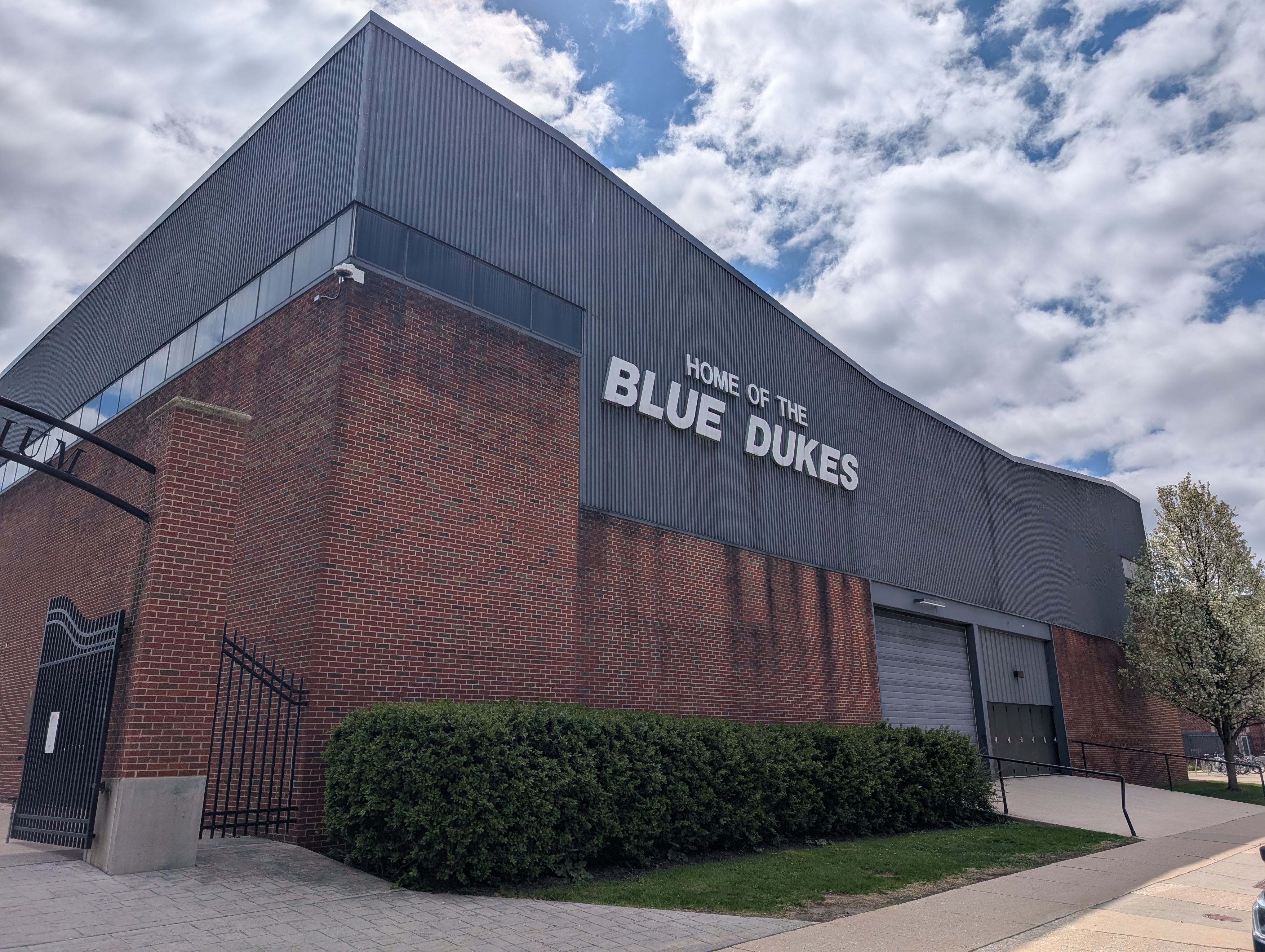
    Most Villagers are aware of the excellent academics, but maybe equally impressive is the athletic success of the student-athletes within the Whitefish Bay School District. Did you know that Whitefish Bay ranks second in the state for total WIAA team titles? If recent history is any guide, there realistically may be a new number one as early as next school year. Today, we take a look at the numbers.

    The WIAA lists team state championships dating back to 1895, when Milwaukee’s East High School (now known as Milwaukee Riverside) won a boys track & field championship held at the University of Wisconsin’s Camp Randall Stadium on June 8th of that year. In the 131 years since, no school in Wisconsin has accumulated more team titles than Madison West (93), followed by Whitefish Bay (90).

    All Time WIAA Team Titles

    The full WIAA list can be found here and reflects team championships through the beginning of this school year. The list above was updated by the WFB Buzz to reflect the standings as of May 2026. The list does not include WISAA championships (sorry, Marquette High graduates, I don’t make the rules) which merged with the WIAA in 2000. The WISAA encompassed private schools who played in separate conferences and competed for separate state titles from public schools prior to 2000.

    A Diverse Track Record 

    Whitefish Bay’s student-athletes have won at least one state championship across 17 unique boys/girls sports. One of the most storied athletic legacies at the high school is in track and field. The Blue Dukes have won 18 team track and field state championships in their history, headlined by an almost unimaginable stretch of dominance: 16 consecutive state titles from 1937 to 1952. That run stands as one of the longest dynasty streaks in Wisconsin prep sports history, across any sport. Incredibly, a few videos from this era have recently surfaced and have been posted by the baystrackhistory blog. 

    2025-26: A Historic Year

    This school year may be the most decorated in recent memory. The Blue Dukes have already won five state team championships, with the spring sports season still underway. The 1998 season also saw the school bring home five championships.

    Girls Swimming & Diving – D2 Champions (November 2025) After winning their first-ever title in 2024, the girls swim team made an emphatic statement with a dominant repeat. 

    Boys Soccer – D2 Champions (November 2025) The boys soccer team defeated top-seeded DeForest 3-1 to add to seven prior state championships for the program.

    Boys Swimming & Diving – D2 Champions (February 2026) Following in the girls footsteps, the boys completed a 2025-26 school year D2 swimming sweep, winning their sixth program title in school history.

    Girls Basketball – D2 Champions (March 2026) In one of the most dramatic finishes of the tournament, the Blue Dukes beat Beaver Dam 64-63 on a defensive stop in the final seconds, winning the program’s first-ever girls basketball state title.

    Boys Basketball – D2 Champions (March 2026) One week later, the boys team completed the school’s first-ever basketball boys/girls double state championships, routing Slinger 77-46 at the Kohl Center. The program won boys basketball state titles previously in 1996, 1998, and 2011.

    Still Playing for More

    With two weeks left in the spring sports tournament season, Whitefish Bay has a few more opportunities to add to its total. The North Shore Conference co-champion baseball squad is a #1 seed in their sectional for the state tournament. The girls soccer team is a #2 seed in their sectional. And the Conference champion boys tennis team enters the WIAA team state tournament as the #1 seed in Division 2.

    A tip of the hat to our neighbors to the North – Nicolet (your author’s alma mater) comes in at number five in the state and our neighbors to the South – Shorewood comes in tied for number twelve on the list. 

    The current first place school Madison West High School has won three state titles over the past decade. Comparing that with the 16 titles won by Whitefish Bay High School in the past 10 years, and one may notice that the gap has been closing quickly. By this time next year, there just might be a new title holder for Most WIAA Team Championships in Wisconsin.