You’ve probably noticed a lot of park upgrades over the past few years. It’s not all a coincidence. Almost exactly three years ago, the Village Board adopted a Comprehensive Outdoor Recreation Plan (CORP), and since then the board, along with the Department of Public Works, has acted on a number of the ideas laid out in that document. Here’s a look at what’s already been tackled, and what may be coming next.
What is the CORP, anyway?
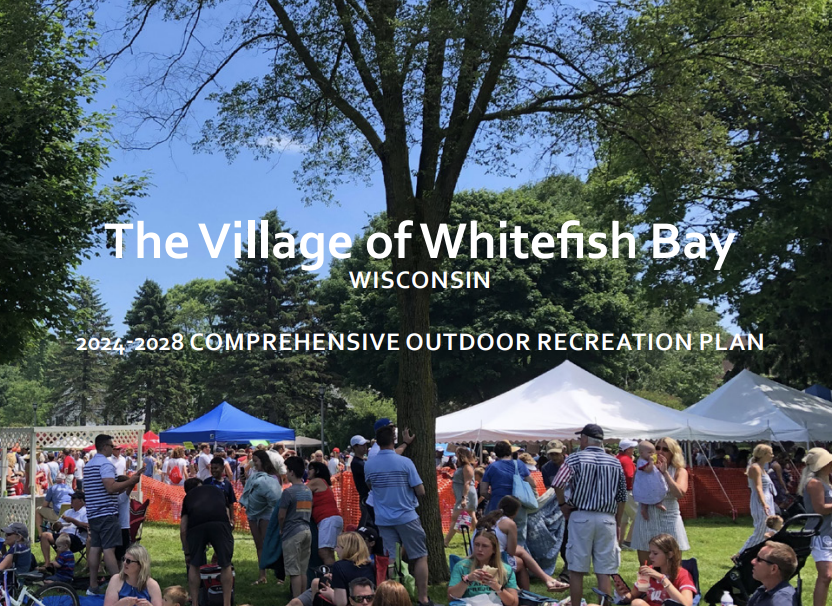
The Village Board adopted the CORP in August 2023. It was intended to be a five-year roadmap, covering 2024 through 2028, developed by Village staff with their consultant (GRAEF), built on an inventory of all ten of the parks within the Village boundaries, a resident survey, and a comparison against peer North Shore communities. The plan also matters for the Village’s bottom line: having an adopted CORP is a prerequisite for applying for outdoor recreation grants through the Wisconsin DNR.
The community survey behind the plan drew 400 responses. Eighty-four percent of respondents said they were at least “somewhat satisfied” with the quality of Whitefish Bay’s parks, but when asked what needed work, three themes came up again and again: aging playground equipment, better accessibility, and continued restoration of the lakeshore, beaches and bluffs. Looking at what’s gotten built since, the Village has been checking those boxes.
What’s already happened
Klode Park bluff stabilization and stormwater management. The Village Board awarded the construction contract in June 2024. The design added a regenerative stormwater conveyance system, two bioswales, and native restoration and invasive-species removal across the bluff’s terraces, treating an estimated 75,000 gallons of stormwater runoff. Three grant sources totaling $250,000 funded it: the Fund for Lake Michigan, the Wisconsin Coastal Management Program, and MMSD Green Solutions. Construction was completed in 2025.
Klode Park landscaping. Reforestation and landscaping work, funded through an MMSD grant that also supported the arboretum at Library Park, wrapped up in October 2025.
Klode Park playground. After residents voted on concept designs, work began in April 2024 on a new playground to replace the decades old wooden structure. The Kid Builder Little Tikes structure was built while keeping the sandbox and tree/bush thicket intact.
Cahill Square Park playground. Residents also had the chance to vote on concept designs. Construction started in April 2025, and the new playground opened that summer. It replaced the old structure with a modular BCI Burke “Play That Moves You” structure, added poured-in-place and engineered wood fiber surfacing for better accessibility, and kept legacy features like the sandbox and swings.
Library Park Arboretum. The small green strip on Marlborough Drive just north of the library got a complete makeover. Work began in October 2025, with contractors clearing existing vegetation and invasive species before crews moved in to plant more than 150 new trees and shrubs representing over two dozen species. The Village’s Public Works staff followed up in spring 2026 with a new walking path through the grounds. The project was funded in part by a grant from the Milwaukee Metropolitan Sewerage District. The pathway officially opened July 24, 2026 — making it one of the freshest completed items on the whole list.
Beyond the headline projects, the Village has been working on less visible infrastructure projects as well. The most significant, of course, was a multi-million dollar repair of a 90-plus-year-old storm sewer that collapsed and opened a major sinkhole beneath Buckley and Big Bay Parks (a surprise project – not in the CORP). Stormwater management improvements have also been completed at Craig Counsell Park. On the smaller end, Cahill received a new accessible sidewalk connecting the playground to the warming house, bathrooms, and tennis courts.
What may come in the future
The CORP lays out a potential year-by-year Capital Improvement Plan through 2028, though every line item is subject to Village Board approval and funding as budgets are finalized. With the exception of the Klode Park warming house, the highlights below have not been formally adopted.
A few highlights:
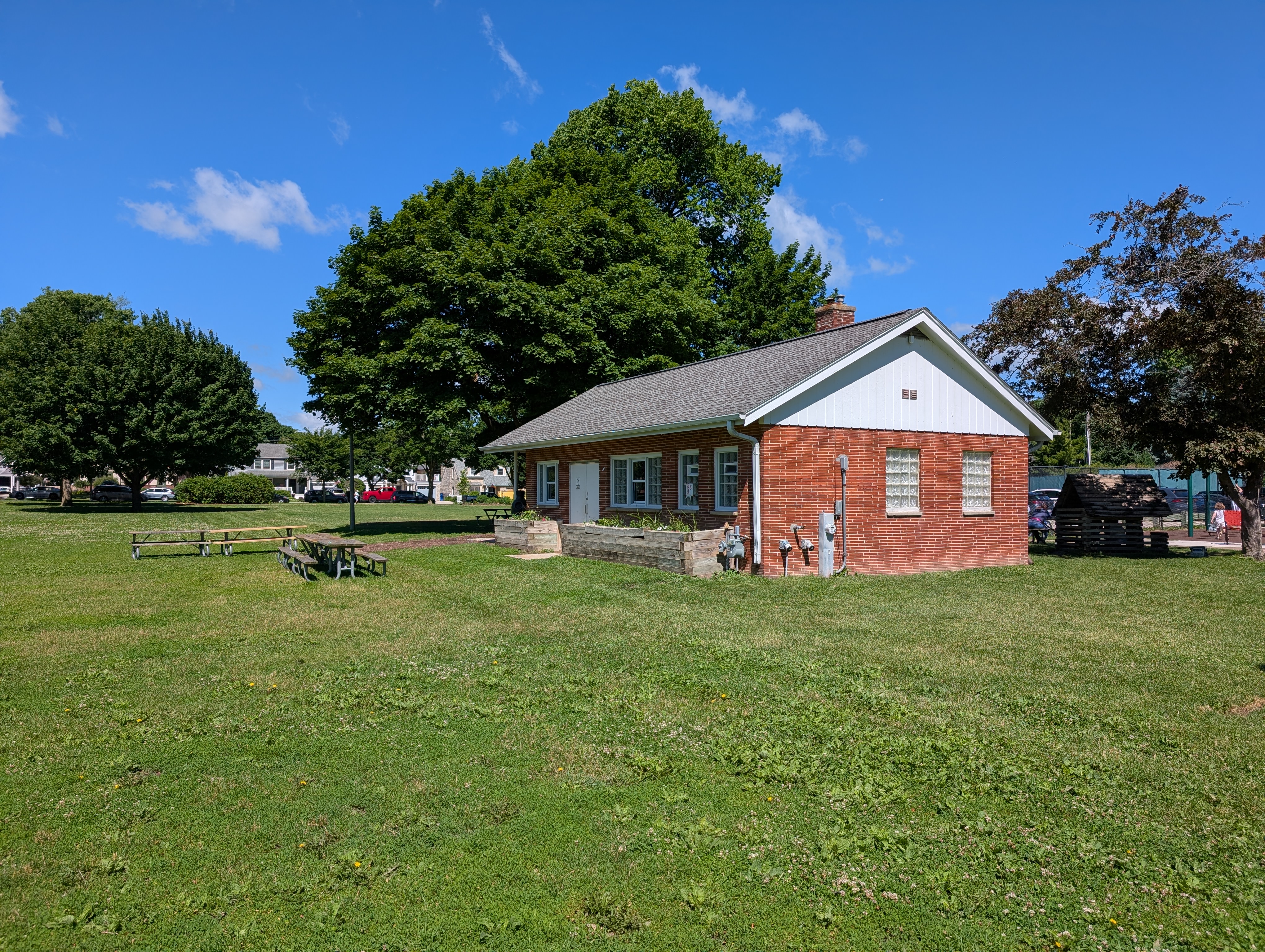
Klode Park warming house: the long-discussed replacement is in the design phase now, with initial concepts recently made public. It’s currently on the books for 2027 at roughly $1.5 million.
A potential sand volleyball installation. Also penciled into the 2027 CIP, but hasn’t been formally presented to the Public Works Committee yet.
Klode Park trail replacement and stairwell repair: for 2027.
Cahill Park Pavilion Upgrade: for 2028.
Where to see it yourself
The full plan, including the park-by-park inventory, survey results, and year-by-year CIP budget, is available from the Village here.
There are a number of ways to enjoy The Argo without buying a ticket. The restaurant and bar are always open and available to the public. Trivia, free jazz Wednesdays, and more.
Village leadership is pleased with minimal disruptions to the neighbors since opening — and neighboring businesses can tell when a show is sold out.
A ghost (!?) and other Easter eggs to look for next time you stop by.
A year and a half ago, plans to revitalize the old Fox Bay Theater were announced to the pleasure of many Whitefish Bay residents. Fast forward to the end of 2025 and The Argo opened its doors to much fanfare, giving residents another third place to gather — one of those spots that isn’t home and isn’t work, where neighbors can bump into each other on purpose or by accident and strike up a conversation.
Now, a full eight months in, The WFB Buzz sat down with Adam Powers, one of three co-founders and its CEO running the place day to day, to ask a few simple questions: how’s it going and what cool things do they have in store?
The short answer is that it’s going well and there is likely more going on at The Argo than most locals realize.
Three businesses, one building
The first thing Powers wants people to understand is that The Argo isn’t just a music venue. It’s three closely aligned verticals all under one roof: a restaurant, an events space and yes, a music venue. Which means there’s a long list of ways to walk through those doors without ever buying a ticket to a show. You can come for dinner and a drink any night they’re open, no ticket, no cover. Free live jazz on Wednesdays, with donation-based dance lessons. Free movie nights. Trivia. Happy hours. A Friday fish fry. And a second-floor ballroom you can rent for a graduation party or a wedding reception. Powers has a slogan for it — never a dark day — and he means it fairly literally.
“It’s challenging to run three businesses at once,” he said. “You have the concerts. You have the restaurant. Then you have private events.” Coordinating with employees to do all three, and do all three well, has been the central puzzle of year one. Getting the word out to the broader community about all three has been equally important.
The restaurant
Photo courtesy Adam Powers
Ask Powers what’s surprised him most since opening and the answer won’t be about the music side of the business.
“The restaurant is slower than we’d like,” he said. “We thought that would be kind of the staple neighborhood hangout type thing.”
Every time the discussion comes up in Whitefish Bay, there is a common theme from residents: they all want more places to eat, especially along the Silver Spring Drive stretch. The Argo has a full kitchen with a menu built by five-time James Beard Best Chef: Midwest semi-finalist Dan Jacobs.
Powers has a theory about the disconnect. “I think we got a little cute with the naming of that space. We call it the lounge,” he said. “Now, we just call it a restaurant. That’s what we are. So that’s kind of my new campaign: we are a restaurant.”
In the kitchen, the fish fry is back by popular demand, they’ve added drink and food specials, happy hour is running, and a menu refresh lands in the coming months. Chefs Isaac Bahn and Bailey Troyer are bringing their own personal flairs to the menu. For example, you may notice an Asian influence on a handful of existing dishes in the future.
The events space
The private events side is still finding its stride, and mostly for reasons of timing. Opening in early December dropped them into the holiday party season with no lead time. Then the 2026 wedding booking window passed before they had a chance to get the word out.
Inquiries are starting to pour in, and The Argo is actively courting categories that haven’t found them yet: local business holiday parties, graduation celebrations, weddings and baby showers. Given the flexibility of the multiple spaces within the venue, patrons can host a more intimate 30 person event in the balcony space, a 150 person wedding in the ballroom or (as a few corporate clients have done) rent out the whole space for a few hundred guests.
The numbers
Powers was proud to share a few figures:
72 shows performed as of late July and on pace for roughly 150 in the first year. Comfortably past their initial 100-show target.
Add a few dozen more to the list once you count things like trivia, jazz nights, happy hours (join for the Dad’s Happy Hour on August 12th!) and private bookings.
Well over 20,000 people through the door to date, by his estimate.
They’ve successfully brought in patrons from across the region, not just Whitefish Bay Villagers. Over 1,000 tickets have been sold to residents of the Chicagoland area, as an example.
Summer and around the holidays are the quiet seasons by nature for music venues; tours thin out and pick back up in the spring and fall.
The Easter eggs
There are a few meaningful things hiding in plain sight at The Argo, some of which you may have walked right past. Others you may have noticed, but may not know the ‘why’. Be on the lookout the next time you walk through the space.
There’s a ghost, and his name is Al. Fortunately, he’s friendly, just like Casper. The legend, as relayed by Powers: Al was a ticket taker at the Fox Bay Theater who has never really left the place. Powers says Al has tapped him on the shoulder more than once, always upstairs, always when he was alone. “I was standing [on the balcony] just watching the band, and all of a sudden I was like, oh, Josh [Powers’ business partner]. I thought it was Josh because I saw him walk this way. I was like, oh my god.” It wasn’t Josh. He’s convinced it was Al.
So there’s a shot waiting at the back bar now. Powers pours one whenever Al makes himself known, an idea borrowed from another local bar, which keeps “angel shots” for staff who have passed away. His bar manager has learned to read the sign if he sees a shot left on the shelf: dude, Al was here again last night? There’s also a cocktail on the menu called the Ghost of Al. Now you know why.
The Wally Waffle Sundae on the menu is named for Chef Bailey’s dog, who passed away a couple of months after opening. Powers pushed to rename the dessert in the dog’s honor.
Original equipment salvaged is on display in the restaurant to pay homage to the Fox Bay’s history. Most of what’s on display survived because Powers walked the building before demolition and slapped stickers on everything he wanted preserved from the basement.
Behind one wall, signatures from the 1990s renovation. Prior employees had left their signatures across one wall while the Fox Bay underwent renovations in the 1990s. When The Argo team finished their own build-out, they signed it too.
A hallway where every band signs the wall. It’s filling quickly already after only eight months. “We’ve run out of space!”
The marquee is changed by hand every week, usually by Powers himself, climbing up a ladder.
The lights under the marquee are LEDs and controlled from his phone. He changes them for holidays. Red, white and blue for the Fourth; green and red during the Christmas season.
Argo the dog. Argo is also the name of Powers’ dog (named before the venue). If you look closely, Argo the dog’s paw prints are pressed into the floor near the back door in the main concert space. I had the pleasure of meeting him in the building the day I visited and he’s featured in the main photo at the top of this post! The venue (and dog) are actually named after a boat Powers’ family spent many happy days on over the years.
What it’s done for the block
For anyone who watched the Village Board meetings leading up to The Argo’s approval, neighbors voiced potential concerns about a few things, namely noise and parking. Fair concerns for anyone living near a 700-capacity music venue.
The WFB Buzz asked the Village how it’s actually played out. Village Manager Kelsey McElroy-Anderson shared that the Village received three noise complaints early after opening. The Argo team looked into it, added vibration isolators to solve a specific issue causing the complaints, tightened up door procedures, and there hasn’t been much concern since then.
On parking, her answer was one sentence. The only parking complaint they’ve received in eight months involved a band’s RV parked overnight as it had unfortunately broken down.
“The Argo team has been excellent to work with.” McElroy-Anderson wrote. “They are responsive when issues arise and willing to collaborate with the Village to identify solutions.”
The other question Village leadership had going in, especially given taxpayer money involved to bring the business to Whitefish Bay: would a venue like this lift the businesses around it?
Powers says yes, and his neighbors can measure it. He’s talked with Moxie’s and The Bay’s owners and they can tell when The Argo has a sellout. He now gives them a heads-up when a big show is coming so they can prepare for it. “They’ve definitely felt the impact,” he said. “Because we can only seat so many [in The Argo restaurant].”
Two additional examples that Powers shared: Recently, a touring band spent their off-hours riding bikes around the neighborhood, grabbing coffee and lunch along Silver Spring, and told him how nice it was to play somewhere they could do that; similarly, on a recent Tuesday, a younger crowd turned up hours early for a meet-and-greet, sat out front, and patronized nearby businesses while they waited.
“That’s really my goal,” Powers said. “Everyone keeps saying, hey, we need more restaurants and stuff like that. We need to support [the businesses] here right now. Let’s support what’s happening and then grow.”
What’s coming
Powers shared that they are always working on future musical bookings, but they’ve also spent significant efforts lately on smaller additions that may be of interest to nearby residents. He shared a few ideas in the works:
Bingo Sundays, launching in the restaurant.
A few more TV screens will be going in in the restaurant space.
A bags/cornhole league.
They’ve kicked around the idea of hosting a dodgeball tournament in the main event space — different local bars can have staff face off vs. another bar’s staff for bragging rights. The Buzz floated the idea of local dandelion lovers vs. non-dandelion lovers. I’d buy a ticket for that!
More comedy. They have hosted one so far, a sold-out Charlie Berens fundraiser, and Powers would like to do more of those.
“Every music venue can’t just be a music venue,” he said. “It needs to be like a chameleon. It could be anything.”
What he’d like you to know
I closed by asking what he wishes locals understood.
“We’d love people to saddle up to the bar. Make this your watering hole.” The Argo is the latest-serving spot on the street, open until 11pm.
And if you’ve walked past and wondered whether you can just poke your head in: “Yes. We’re open. And also, come see the other spaces. We’re happy to walk you around.”
Consider that an open invitation and help make The Argo an irreplaceable community asset.
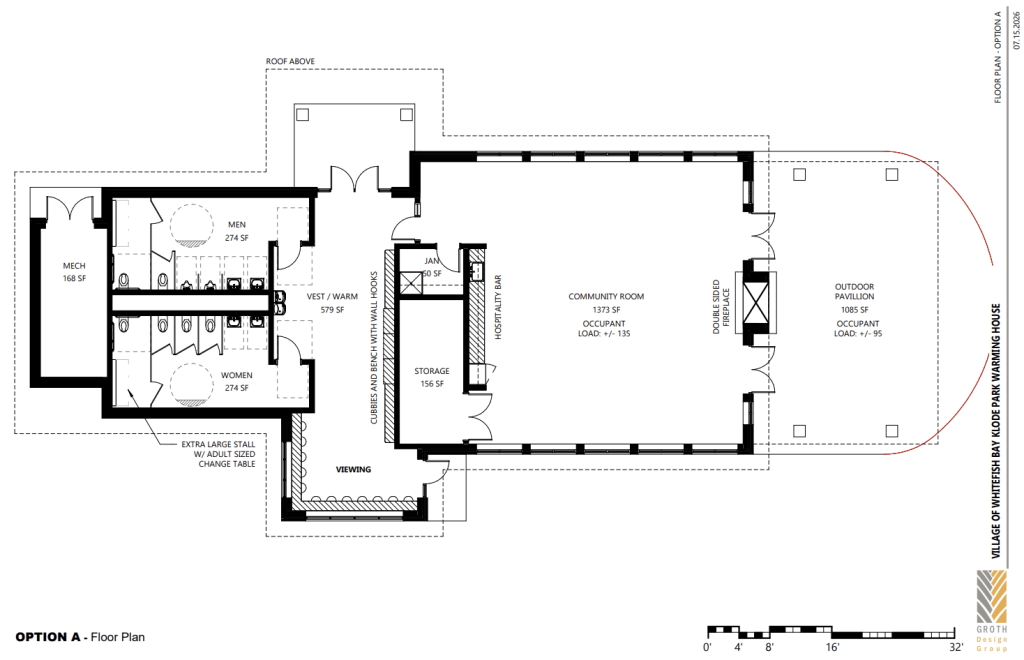
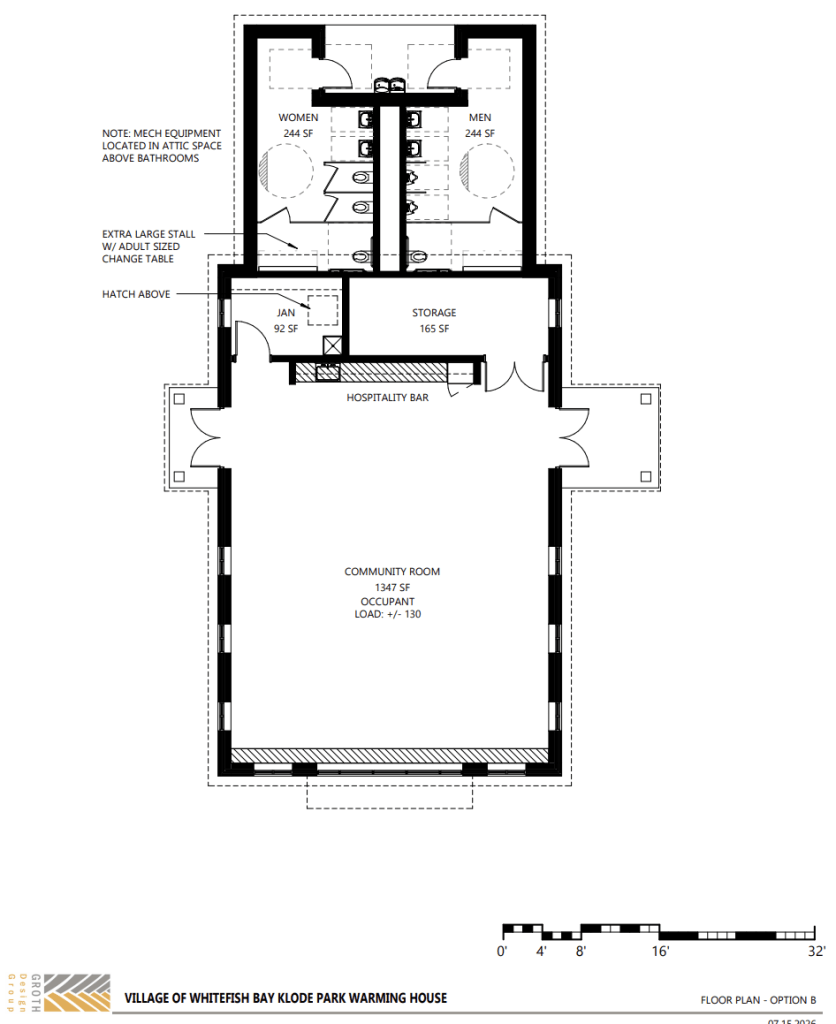
Klode Park warming house: First look at initial designs below. Concepts will be refined before a public survey will be released for residents’ feedback.
Elmbrook’s $100M referendum: District approves a facilities referendum question for November’s ballot to update and expand four aging schools from the ’50s and ’60s.
The Village Board got a first look at draft concepts for the rebuilding of the Klode Park warming house. Here’s the rundown, plus another item worth your attention.
Klode Park Warming House: Three Initial Concepts
The village recently appropriated $1.5 million to replace the aging Klode Park warming house, and earlier this year approved a contract with the GROTH Design Group to lead the design and construction. Since then, GROTH has held two open houses as well as sessions with the Civic Foundation and Business Improvement District to gather early input. Monday’s presentation to the board was the next step: three initial design concepts, aimed not at picking a “winner” but at discussing feedback to narrow the field before taking something to a broader community survey.
Scroll the images below to see each version presented:
After a detailed back-and-forth discussion, covering everything from mechanical room placement, to where a band should face during a concert, to whether large windows make a rented space feel too “exposed” for something like a funeral reception, the board converged on a few takeaways, including:
Bathrooms should be accessible from both indoors and outdoors
The building needs to look good from all sides, particularly the Lake Drive-facing side, since that will be how most Villagers will see it day to day
The board would like a standalone, detached pavilion/band shell (directing music toward the lake) in addition to an attached covered overhang or patio on the main building itself
Architectural details may be added to make the building reflect similar architecture found in the Village.
Residents like the fireplace at Cahill – keep that in this design.
The tentative plan going forward appeared to be to develop two refined concepts using the feedback provided.
No formal vote was needed Monday as this was a discussion item to guide next steps. Look for the refined concepts and a public survey in the coming weeks.
The anticipated construction schedule estimates that the warming house will be completed before the end of 2027.
Elsewhere in Wisconsin: Elmbrook Puts $100M Referendum on the Ballot
For anyone tracking how other Wisconsin districts are navigating the same facilities-and-referendum landscape that Whitefish Bay is working through, the Elmbrook School Board voted this month to put a $100 million facilities referendum on the November ballot. Like Whitefish Bay, the Elmbrook district is high performing and shares many demographic/median income similarities. It encompasses Brookfield, Elm Grove and parts of New Berlin. This will be the district’s first referendum since 2008, when voters passed a $62 million referendum. The Journal Sentinel covered the story here.
The package would fund infrastructure upgrades and ADA improvements at four aging schools built between 1958 and 1969, plus building additions at two of them. It pairs with a separate $71 million in planned facilities/maintenance spending funded through the district’s regular operating budget over the next decade.
If approved, the district shared that the tax impact would be a modest increase of about $66 more per year for the owner of a $600,000 home. The Elmbrook School district encompasses a much larger population and tax base than Whitefish Bay’s. The district serves over 7,800 students at 10 schools relative to Whitefish Bay’s more than 2,800 students across four schools.
The Elmbrook district’s 20 year facilities plan can be found here. Warning, they use BoardDocs too!
Mill Rates per $1,000 of assessed home value for Milwaukee area School Districts in the 2025-2026 school year. From Wisconsin DPI’s School Finance Maps
Middle school options: A new option would build the school on Armory Park around the Veterans Monument, leaving it untouched, for $67.3M. No debate on which option being considered is preferred yet.
Class sizes: With some sections projected at nearly 27 kids, the board directed administration to post for one additional upper-grade elementary teacher.
This week’s board meeting was anything but just a summer placeholder. Over roughly three hours, the board got its first look at a brand-new middle school site option that keeps the Veterans Monument and Memorial Garden exactly where it is, heard a status update on the community survey and had a candid debate about elementary class sizes.
A potential new wrinkle: build around the memorial
The headline document of the night was a fourth middle school option: build the new school on Armory Park, but notch the building around the existing Veterans Monument so it never moves. Architect Nick Kent walked the board through the current options being considered.
The district provided four updated cost summaries for the middle school:
Option 1— Maintenance only: $21.04 million. Fixes the documented maintenance list but the layout stays exactly as-is and extends the life of the old building. Complete summer 2030.
Option 2 — New building on Armory Park (last April’s ballot question): $67.7 million. Requires relocating the memorial and green space, tennis courts, and a parking lot. Complete fall 2029.
Option 3— Renovate and expand in place: $67.8 million. A three-year, four-phase “full gut” that keeps students on site the entire time. Complete spring 2031.
Option 4— New building, memorial untouched: $67.3 million. The building shifts south, the memorial stays put, and the school wraps around it. Complete fall 2029.
Click the underlined options above for more granular details from the school district (loaded to Dropbox)
The tradeoff on Option 4 is the lacrosse field. Pushing the building south shrinks the practice field below regulation dimensions for lacrosse and soccer, meaning competitions would move to the stadium complex creating more scheduling pressure there. It also requires a retaining wall near the softball field and additional Village-owned land, and Kent was candid that a three-story building wrapping a memorial raises a question: how close can you build “and maintain the dignity of that site”?
Kent was equally candid about what renovate-in-place actually means. It is not patching what’s broken — it’s stripping the building to its bones while roughly 600 students remain on site. Ten temporary classrooms in the gymnasiums, no functioning gym for up to three years, no library for a stretch, reduced outdoor play space, and a likely closure of Henry Clay Street for staging.
The board was explicit that no decision was being made Tuesday — these are “data points,” not finalists.
The community survey is ongoing
The Donovan Group reported that more than 1,000 survey responses have come in thus far as of Tuesday evening, well past the firm’s minimum target, though the board is hoping for many more responses. The survey stays open through July 31st, with a full report to the board targeted for mid-August. Don’t forget to take the survey if you haven’t already! It can be accessed here.
Class sizes
This past school year, there was a vocal cohort of parents who were not pleased with class sizes at the elementary schools. The board discussed the potential for adding sections to alleviate the class size issue. Current projections put Cumberland’s 3rd grade and Richards’ 5th grade at an average of 26.75 students per section, with Cumberland 5th grade at 26. The Administration shared that adding a section costs roughly $142,000–$146,000 once you count the teacher, Encore minutes (art, music, PE, Spanish), Chromebooks, and furniture.
Board members invoked the district’s own staffing plan, which cites a historical class-size range of 21–26 — and several were blunt that 27 kids in an elementary room isn’t consistent with what this community expects. After polling the table (four in favor, two neutral), the board directed administration to post for one additional upper-grade elementary teacher, deliberately not pinned to a specific grade or building yet, so enrollment can shake out over the next few weeks. The budget already carried a placeholder for one section, so this doesn’t create a deficit.
One more month. The board has to settle a November referendum question by the end of August.
While most Wisconsin school districts are bracing for a reduction in state aid next year, Whitefish Bay is among the minority that will likely see an increase, a meaningful piece of context as the district prepares to ask voters for a new facilities referendum this fall.
The Wisconsin Department of Public Instruction released its preliminary general aid estimates last week for the 2026-27 school year. As reported by WPR, the headline statewide: about 60% of Wisconsin’s 421 public school districts will see state aid decrease, with 92 districts hitting the maximum allowable reduction of 15%. Only 38% of districts will see an increase, Whitefish Bay among them, while a handful expect no change.
What It Means for Whitefish Bay
Whitefish Bay’s general aid from the state is projected to increase by $320,761 — a 2.07% gain, rising from $15,487,946 in 2025-26 to $15,808,707 in 2026-27.
The WFB Buzz reached out to Ben Irwin, the district’s Director of Business Services, who confirmed the numbers and provided a more precise breakdown. The 2026-27 estimate of $15,808,707 consists of $15,495,806 in Equalization Aid plus $312,901 in Special Adjustment Aid tied to the Chapter 220 program. The prior year’s total of $15,487,946 broke down as $15,056,426 in Equalization Aid plus $432,520 in Chapter 220 Special Adjustment Aid. Irwin noted the district also receives state aid from other sources (Special Education Aid and Per Pupil Aid among them) but Equalization Aid is the largest single source of state revenue the district receives each year.
That’s welcome news, but it’s important to understand what state aid figures actually mean. As Irwin put it: Equalization Aid “will not impact how much total revenue we have to work with within our budget since Equalization Aid is balanced out with the tax levy within the Revenue Limit.” Sara Shaw, deputy research director at the Wisconsin Policy Forum, made the same point to Wisconsin Public Radio: a change in state aid doesn’t change how much a district can spend — it changes where that money comes from. If state aid goes up, property tax levy needs go down proportionally. If state aid goes down, property taxes fill the gap.
In other words, a $320,761 increase in state aid is effectively a reduction in pressure on Whitefish Bay property taxpayers — a modest but real benefit heading into a year when the district is also likely to ask voters to approve a significant capital referendum.
It’s also worth noting that overall state general school aid remains flat statewide for the third consecutive year at $5.58 billion. Factors often cited in the broader debate include declining statewide enrollment as birth rates have fallen and a growing shift of funding toward voucher programs. Notably, the state’s most recent budget did include a $1.4 billion increase for K-12, but directed it toward special education reimbursement rather than general aid. “Membership”, as the DPI reports enrollment, is down 1.9% across the state using January 2025 numbers compared to January 2026. Whitefish Bay’s membership increased in this same time period from 2796 to 2838 according to the data.
The stakes of school aid trajectory are not lost on village leadership. Village President Kevin Buckley commented to the Buzz: “When asked by state officials to name the biggest issue facing our village, my answer is school funding. That might be an abdication of my municipal duty, but it is the honest reality for us and communities across Wisconsin.”
How Neighboring Districts Fared
The results among nearby districts were mixed:
District
2026-27 Aid (Estimated)
2025-26 Aid (Final)
Change
% Change
Whitefish Bay
$15,808,707
$15,487,946
$320,761
+2.07%
Shorewood
$7,044,641
$6,713,401
$331,240
+4.93%
Glendale-River Hills
$2,028,441
$1,910,687
$117,754
+6.16%
Nicolet UHS
$737,996
$826,099
-$88,103
-10.66%
Fox Point J2
$1,432,138
$1,684,868
-$252,730
-15.00%
Maple Dale-Indian Hill
$73,571
$86,554
-$12,983
-15.00%
July Estimates Can Move
These are preliminary July 1 estimates — the figures are finalized each October, and the gap between the two can be significant. Last year’s July estimate for Whitefish Bay was roughly $16.1 million; the certified October number came in nearly $600,000 lower.
Irwin explained why: the July 1 estimate is based on budget data, while the October certification is based on actual fiscal activity and the district anticipated that drop. He added that the DPI has moved to a new fiscal reporting format allowing districts to submit budget data more regularly, which he expects will narrow the July-to-October gap going forward.
There’s also a factor entirely outside the district’s control: spending trends at other districts across the state affect how the aid formula distributes the fixed statewide pot. “It is not a perfect science, but we do our best to maximize state aid for Whitefish Bay in order to minimize the tax burden on the community,” Irwin said. He noted that Whitefish Bay sits “right on the edge” of the formula’s shared-cost scenarios, so the district monitors spending habits and statewide trends closely.
One concrete example of that active management: Irwin confirmed that the district’s recent early payoff of its remaining debt obligations — covered by WFBBuzz in May — was done in part to try and take advantage of this formula and get the district more aid this fall.