Author: Adam Stoffel

  • Village Construction Roundup: Hampton & Santa Monica Changes and a Final Look at Lydell & Silver Spring Development

    Village Construction Roundup: Hampton & Santa Monica Changes and a Final Look at Lydell & Silver Spring Development

    At this week’s Public Works Committee meeting, engineers from Strand Associates walked the committee through concept alternatives for a safety overhaul of the Hampton Avenue and Santa Monica Boulevard intersection. The project is to be funded through the federal Highway Safety Improvement Program (HSIP), which picks up 90% of the cost, with the Village covering the remaining 7.5% and the City of Milwaukee footing the remaining 2.5% (the SW corner is City land). The project is estimated to cost $1.5 million, meaning the village would cover $116,000. No formal action was taken as this was a workshop session ahead of a final recommendation expected at a Village Board meeting in the coming weeks.

    Why this intersection

    The numbers tell the story: 19 crashes over the 2019 to 2023 period reviewed for the grant application. The dominant patterns were angle crashes: four left-turn angle crashes (including one high-severity crash involving a pedestrian, who attended a recent public meeting and described her multi-year recovery), five right-angle crashes, and four vehicles hitting signal poles. The Village median signs have been struck twice in the period as well.

    The engineering culprits, per Strand:

    • A “negative offset” on the north-south left turns. When cars are queued in the opposing left-turn lane, drivers can’t see oncoming through traffic, especially around taller SUVs and trucks.
    • Poor signal visibility. 
    • Non-compliant pedestrian facilities. All four corners have outdated curb ramps with no detectable warning fields and no pedestrian push buttons.
    • Inconsistent bike markings (only the south leg has them) and a cluster of driveways near the intersection, particularly at the gas station.

    Anyone who’s crossed there with a stroller on the way to the Oak Leaf Trail or the shops nearby already knew this intersection punches above its weight in stress. Between the apartments, CVS, gas stations, county bus route 14, and heavy Oak Leaf Trail foot and bike traffic, the intersection is a busy thoroughfare of multimodal traffic.

    The options on the table

    Strand presented three concepts:

    Alternative A keeps the existing footprint and focuses on the signals: new overhead signals with lane-designated heads and reflective backplates (like Silver Spring’s), upgraded vehicle detection, emergency vehicle preemption, pedestrian push buttons and countdown timers, new curb ramps, bike lanes through the intersection, high-visibility crosswalks, and intersection lighting. The biggest functional change: northbound and southbound left turns become protected-only, meaning you’d turn left on a green arrow or not at all.

    Alternative B is everything in A, plus a longer northbound left-turn lane on the south leg to handle the queues that protected-only turns will create. The tradeoff: it removes on-street parking along the curve in front of the funeral home, about five spaces beyond what A would already claim.

    A roundabout was studied at the public’s request and is likely dead. A single-lane roundabout sized for trucks that use these routes would have required taking property in all four quadrants, including two of the gas station’s pumps (which could effectively force a full property acquisition), plus impacts to the new apartment building area, CVS parking, and the southwest corner.

    What’s not getting fixed (yet)

    The most common public comment was about something outside this project entirely: the Oak Leaf Trail crossing on Hampton just west of the intersection, where near misses aren’t completely uncommon as drivers are often confused whether to stop or not for trail users. One such accident occurred this week, as noted by WFB resident Ben Handelman on social media. That stretch sits in the City of Milwaukee, not the Village. The encouraging news: Milwaukee is spending its own money on conceptual work with the same engineering firm so a future trail-crossing project can dovetail with this one. No commitments yet on exactly what that might mean, but there is collaboration occurring, which may spark improvements nearby in the future.

    Timeline

    Design work continues through the end of this year with final plans coming in 2027, and construction in 2028. The Village Board is expected to take up a final recommendation (it appeared that could be Alternative B in some refined form), at an upcoming meeting. If you have opinions about the parking, the bike lanes, or the protected turns, it’s now or never.

    Also this week: final vote on the Lydell & Silver Spring development 

    One more item for your radar: the redevelopment at Lydell and Silver Spring reaches its final major approval step tonight. The Community Development Authority meets tonight at 6:00pm to take action on the architectural and site plans for the mixed-use building replacing the Bay Manor Apartments at 131 W. Silver Spring Drive.

    The proposal includes a three-story mixed use building with a Bank of America and one additional commercial space (no word on potential tenants at this point) on the ground floor, plus 16 apartments on the second and third floors, 40 parking stalls across a ground level and an underground lot, and a rooftop terrace. The Architectural Review Commission signed off in June and recommended approval, and because the property sits in the Silver Spring Drive Business District, the CDA gets an additional look at the development. Village staff is recommending approval subject to a list of conditions — mostly follow-up submittals still owed on lighting, rooftop mechanical screening, fencing, and signage.

  • How a Florida Couple Became a Whitefish Bay Fourth of July Tradition

    How a Florida Couple Became a Whitefish Bay Fourth of July Tradition

    If you’ve bought a snow cone, a corn dog, or a funnel cake from the tents at Klode Park over the years, you likely got it from Randy or Roberta Ferrell — but you probably didn’t know their story goes back more than two decades, includes one very good friend and one very unlikely engagement.

    Roberta and Randy Ferrell

    I sat down with the pair, who run R&D Food Service, at Klode Park to find out how a couple from Conway, Florida (just outside Orlando) ended up as a decades-long fixture of Whitefish Bay’s summer season.

    It started with Mike Enoch

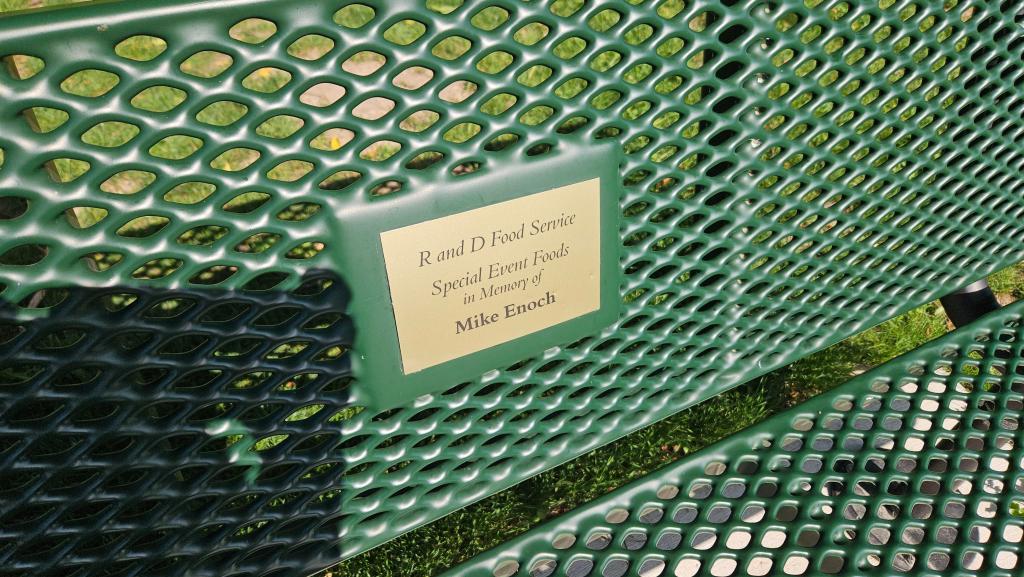
    Randy spent 15 years as the right-hand man to Mike Enoch, who ran Special Event Foods. Mike and his wife Lisa are the people who first brought their food vending service from Orlando to Whitefish Bay’s Fourth of July celebration, more than 20 years ago.

    Enoch sadly passed away in 2014. Randy ran that entire summer’s shows — more than 30 of them — before Lisa agreed to sell him the business. Randy’s first year running the Whitefish Bay show under his and his wife’s name was 2015. It helps that Roberta has also worked as a professional chef for a number of years. The only year they’ve missed since that point is 2020, when COVID shut down the Fourth events.

    R&D Food Service — the name comes from Randy and their son Dustin (and now grandchild Diana) — kept the same tents, the same banners and the same crew Enoch had built, “like no change ever happened,” Randy said.

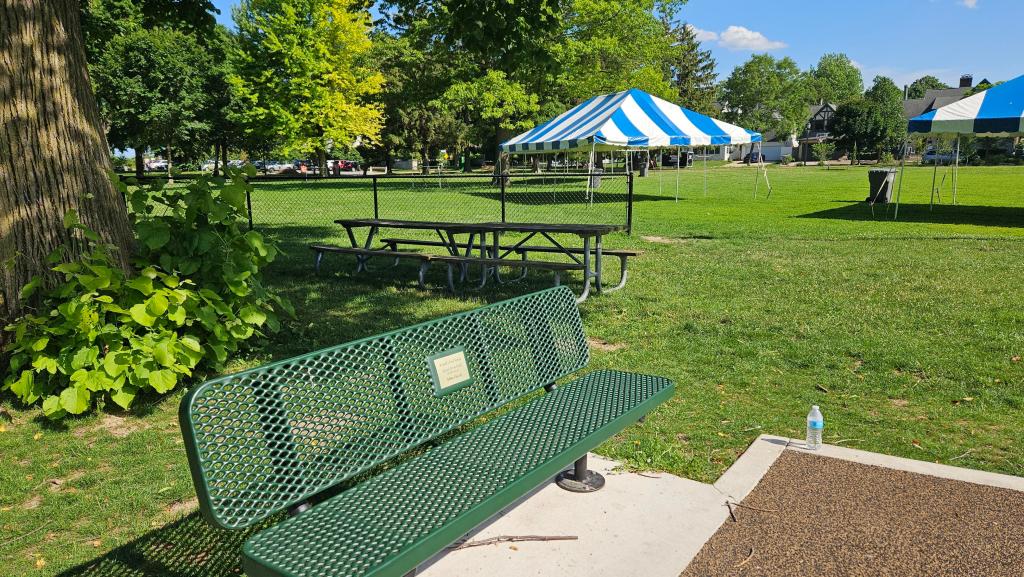
    If you take a look at the park bench near the toddler play structure at Klode Park, Randy and Roberta donated it and dedicated it to Mike Enoch when the village put out the call for bench sponsors.

    They were saddened that the bench’s shade disappeared this year when the massive basswood tree in the park fell down weeks ago.

    A family connection that turned into an engagement

    And then there’s a story that has become tent lore. A few years back, on a night the fireworks got rained out and pushed to the next day, a friend brought her adult daughter Tyler up to visit from Chicago for a birthday celebration. Tyler and Dustin struck up a conversation and kept talking on the phone for the next year, until she moved from Chicago to Florida to be with him. They’re engaged now, and their daughter — Randy and Roberta’s granddaughter — has made the trip up to Whitefish Bay with them the last few summers. Who knew our very own Klode Park doubled as a matchmaking service!? 

    Why they keep coming back

    Roberta and Randy split their year around two seasons: lawn care business in Florida during the winter, feeding us Midwestern folks — Whitefish Bay, Ann Arbor, Toledo, Columbus, Chicago — through the summer. But Whitefish Bay is the one they talk about like family. “It’s become a family reunion when we come up,” Roberta said. 

    Part of that is because they drive up, bringing much of their actual family with them from Florida, they said, but a big part is also the people who they have met and gotten to know year after year in Whitefish Bay. They are grateful (and all Villagers should be too!!) for the hard work of our Public Works employees, Civic Foundation members, public servants and all the volunteers that make the Village’s events happen. They specifically wanted to make sure credit was given to Ryan Sanchez, Pat McCarthy, Matt Collins, Lexi and Dave Deblitz (who built the wooden bar by hand that is used year after year in the beer tent), John, Kevin Buckley and Ray Sipek, to name just a few.

    The two also had praise for the recent work at Klode Park itself — new landscaping, native plants replacing overgrowth, and a rebuilt playground. “The new park is just absolutely gorgeous,” Roberta said.

    Catch them at Art Fest

    Randy and Roberta will be back this weekend for the Whitefish Bay Art Fest on Silver Spring. You’ll have no trouble finding them – just follow the scent of good food in the air! Be sure to say hi and thank them for being an awesome part of this community and feeding the villagers of Whitefish Bay. After that, it’s back on the road toward Chicago for their next stop.

    All photos in this post are courtesy of Roberta and Randy Farrell

    A tip of the hat to a dedicated Villager who let me know about this story! Thank you! If you know of any other stories that need telling, please don’t hesitate to reach out – wfbwibuzz@gmail.com

  • Milwaukee County’s Courthouse Project Just Doubled in Price. Here’s Why Villagers Should Be Paying Attention.

    Milwaukee County’s Courthouse Project Just Doubled in Price. Here’s Why Villagers Should Be Paying Attention.

    One of the reasons I started writing this blog is (at least an attempt!) to do my part in heightening villagers’ awareness of things happening around us: what, when, and why, specifically from the view of a Whitefish Bay resident. I understand why many of us have trouble keeping up with some of these things, but the foundational aspect of a functioning democracy is an informed electorate, so it is incumbent upon all of us to at least try.

    Many times that means talking about topics that are still in the earliest stages of formation and drawing some reasonable assumptions that may be a touch premature, but ultimately could drive how the conversation plays out in the future. Today’s topic is in that relatively early stage (even though it’s been discussed and considered for years at the County level), and some of what is discussed below will very likely change in the future.

    Milwaukee County dropped some news last week that villagers should have on their radar: the county’s plan to replace the crumbling Public Safety Building downtown, part of the “Investing in Justice” Courthouse Complex project, now carries a price tag of $897 million. That’s roughly double the prior figures, which have ranged between $435 million and $490 million, that county officials had been using just a week ago. That information dropped hours before the July 4th holiday weekend last week, which isn’t unusual for less than flattering news. Both Urban Milwaukee and the Journal Sentinel had write ups.

    Unlike a school referendum, the County Courthouse complex spending does not require a direct vote from the taxpayers. 

    Every property owner in Whitefish Bay is a Milwaukee County taxpayer, and this is shaping up to be the single largest capital project in county government history. So here’s what we know, what we don’t, and why now is the time to start paying attention rather than after the bill shows up.

    What’s actually being built

    Public Safety Building on State Street

    The Public Safety Building, the county’s current criminal courthouse annex, is nearly 100 years old and, in the county’s own words, “functionally obsolete.” Deferred maintenance and code compliance issues alone are estimated at $334 million just to keep the current building limping along, and that doesn’t fix the underlying operational problems.

    Timeline from the Milwaukee County Committee on Finance meeting on the Courthouse Project in June 2026

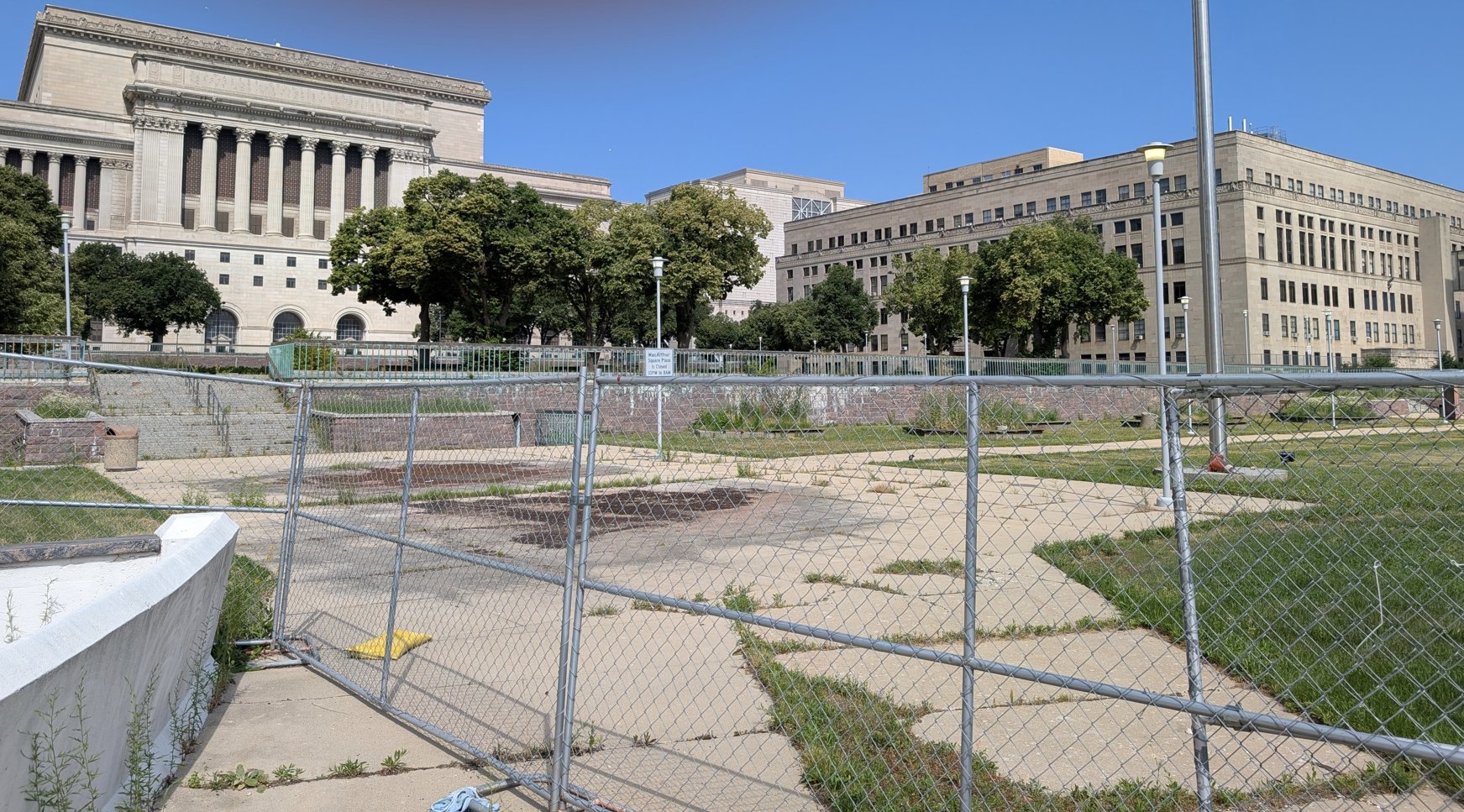
    The plan is to demolish the Safety Building and construct a new annex next to the historic 1930s courthouse on 9th and State Streets, connected by skyway, with a new public plaza entrance facing MacArthur Square. Design is now at “100% conceptual” stage. Demolition is slated for 2028, construction from 2028 to 2032.

    The borrowing math, and what it could mean for WFB Villagers

    From the Milwaukee County Committee on Finance meeting on the Courthouse Project in June 2026

    Here’s where it gets real for property owners. Under the prior estimate, the county projected financing $436 million of the cost. That would have cost Milwaukee County property owners $88 a year on a home valued at $250,000 according to a presentation to the County Committee on Finance in June. With Whitefish Bay’s average home assessed value sitting at $685,000, that would have put the numbers at $241 a year for each home.

    Urban Milwaukee reports: “In total, the county is expecting to borrow $763 million for the new project.”

    Using the same assumptions from above and adjusting for the $763 million, the total cost for an average Whitefish Bay home comes to about $420 a year.

    A couple of huge disclaimers here. The first is that I haven’t been able to confirm some of these numbers myself because the plan has not been fully released to the public. I’ve spoken with a few people more in the know than myself, and the best I can tell is that the County Executive David Crowley’s administration sent out a statement to at least the Journal Sentinel and Urban Milwaukee along with other officials apparently hours before the holiday weekend. There is no press release or other easily available information at this point. 

    Second, even if we had those details to confirm ourselves, it’s likely that no one truly knows the final financing plan at this point. During June’s Committee on Finance meeting, there were multiple mentions of more details coming in July 2026. Until those details are made public, any tax estimate, including ours above, is an educated extrapolation, not gospel. 

    Third, even if the above numbers turn out exactly correct, that doesn’t mean the tax bill automatically goes up by that amount – there may be debt payoff that reduces other portions of the tax bill that makes the net amount less, as an example. 

    We also know that the County has lobbied for state funding to be dedicated to this project in the past, though it appears that has been mostly unsuccessful to date. It bears mentioning that there will be major turnover in leadership at the state level in the coming months. The Governor, Democrat Tony Evers will be retiring, as will Republican State Assembly Speaker Robin Vos. It’s anyone’s guess how things may play out. Milwaukee County Executive Crowley is running for the Governor seat. 

    Why the WFB Buzz is flagging this now

    We don’t have the final numbers. Nobody does yet. But three things are true at once: the project itself is necessary and something, whether it is this proposal or an alternative, will be done in the future, the price has already doubled once, and the financing plan that determines your actual tax bill is still being negotiated and finalized.

    This also isn’t happening in a vacuum. Whitefish Bay households are already looking at a likely November referendum from the School District, the water utility has a rate case pending before the Public Service Commission, and the usual annual creep in village and state levies isn’t going anywhere. Under normal circumstances, none of these decisions gets made with the others in mind — the County Board, the School Board, and the PSC each look at their own numbers in their own rooms. Villagers will see the whole picture when opening their tax bill and utility statement. That’s the reason to pay attention now, while each of these is still taking shape, rather than in the coming years when they all potentially show up at once.

  • Whitefish Bay’s Fourth of July: What’s New, What’s the Same, and What to Know About Construction

    Whitefish Bay’s Fourth of July: What’s New, What’s the Same, and What to Know About Construction

    The Fourth of July is days away, and Whitefish Bay’s annual celebration (this time for America’s 250th birthday!) is one of the best days in the village. The WFB Buzz spoke with Andrew Jetton, Head of the Civic Foundation’s Parade Committee, as well as a few village employees to get the full rundown — parade, live music, kids games, fireworks, and a few new wrinkles worth knowing about.

    The Basics

    Some Villagers will be getting the day started off bright and early with block parties. The parade kicks off at 11:30 am at the corner of Silver Spring and Kent Avenue, heads east on Silver Spring, then turns north on Lake Drive to Klode Park. The events at Klode begin at 1pm, with kids games running from 1–4 pm, live music throughout the afternoon and evening, and the fireworks finale at 9:30 pm.

    One Ask Before Anything Else: The Kids Games Need You!

    Here’s the thing about the kids games at Klode Park — they don’t happen without volunteers. If the slots don’t fill, the booths don’t open, and the games that are a highlight of the day for many Whitefish Bay kids just won’t be there.

    The ask is small: shifts run 90 minutes, no experience necessary. You show up, someone tells you what to do, and the games themselves are about as self-explanatory as it gets. Tents will be set up at every station, so you’ll have shade. And yes, there’s a drink coupon in it for you!

    Jetton himself is doing a full day of it — parade in the morning, a game shift, then the beer tent — and says it’s genuinely one of the more fun ways to spend part of your Fourth. This is your invitation to be part of that! We are a community blessed with volunteers, so if you haven’t before, here is your chance to join that tradition!

    Sign up for a 90-minute shift here — even one slot helps.

    What’s New This Year

    Veterans as Grand Marshals. In recognition of America’s 250th anniversary and the sacrifices many of our bravest have made, the Civic Foundation is inviting every Whitefish Bay veteran who wishes to participate to march alongside other veterans as a group of Grand Marshals. More than 15 have registered so far, and there will be a vehicle available for those who can’t walk the full route. If you’re a veteran and haven’t registered yet, feel free to register here.

    In addition to the veterans, the local Daughters of the American Revolution chapter will join this year’s parade, a fitting nod to the country’s founding on its 250th birthday.

    Six state championship teams in the parade. Whitefish Bay High School had an exceptional year athletically, claiming six WIAA state team championships and tying a record for most WIAA team championships in a school year. All six teams are expected to march.

    The Diamond Dancers are back, as are many familiar faces who join the parade each year. Be on the look out for a new one: Bernie and Barrel Man, the Brewers mascots, will make an appearance alongside the returning Roscoe (Admirals) and Iggy the Marquette Golden Eagle.

    The Bike Brigade Is Back

    Another new addition: the Kids’ Bike Brigade is being revived after a hiatus. A generation ago, decorating bikes in red, white, and blue and riding up to Klode Park behind the parade was an annual Whitefish Bay tradition, though there hasn’t been one in a number of years. I’ve asked around and I couldn’t quite pin down how long it’s been since the last one – I’m curious if anyone out there remembers!

    Children 12 and under are invited to join. They can start at the staging area with the parade (SS & Kent) or simply fall in as the Brigade passes their spot along the route. The bike group follows the Badger Band as the final entry in the parade. About 50 kids are already registered, ranging from age 2 to 12. Parents of younger children are welcome to ride or walk alongside.

    A panel of judges — elementary school teachers from the village — will pick the best-decorated ride. The Grand Prize is a $500 gift certificate to Wheel & Sprocket. Other finishers will receive a gift certificate to Dairy Queen, Winkie’s, or Burke’s Candy (while supplies last).

    Register here. No e-bikes, and helmets are required. 

    Live Music Lineup

    • Myles Hayes — National Anthem at 1 p.m.
    • Tavern Pedalers — 1–3 p.m.
    • Bigger Boat — 4–6 p.m.
    • ReillyRocks Irish — 7–9 p.m.

    A Note on Construction and Parade Viewing

    Image from the WFB Village’s Sendik’s Redevelopment Construction Updates

    The Sendik’s construction at Silver Spring and Lake Dr is ongoing and will affect where you can stand to watch the parade.

    The parade route is not changing. But viewing will be restricted in the construction zone.

    Beaumont Ave remains fully closed between Lake Dr and Consaul Pl.

    The Village shared that the Sendik’s construction area should remain clear and will not be open to viewers. That means the north side of Silver Spring approaching Lake Dr and around the corner on the west side of Lake Dr from Silver Spring up towards Lake View will not be available for parade watchers. 

    Jetton reiterated that standing in the street, including outside the construction fencing at Sendik’s is not advisable. The parade has a lot of vehicles making that turn onto Lake Dr, it’s a tight space, kids dart into the street for candy, and it would simply be unsafe. 

    The east side of Lake Dr will be open and (mostly) clear of construction for the parade including the crosswalk at Beaumont Ave.

    We’ll see you out on one of the best days of the year in the village!

  • Whitefish Bay Has Been Debating Its Middle School for 40 Years. A Look Back at Recent History.

    Whitefish Bay Has Been Debating Its Middle School for 40 Years. A Look Back at Recent History.

    Before diving into today’s post, please take the time to fill out the School Board’s Survey, which is now live through the end of July – dgsurveys.com/r/WhitefishBay2026. While the prior survey was physically mailed to households in the district, this edition of the survey is online. Paper copies can be obtained by emailing districtnews@wfbschools.com

    The Whitefish Bay School Board is once again weighing whether to renovate or build a new middle school, likely at the Armory Park site. It’s the most ambitious version of an idea the community has wrestled with for nearly four decades. The building at 1144 E. Henry Clay St., which originally opened in 1919, was too small from the day it reopened as a school in 1989, and the district has spent the better part of the past forty years patching, expanding, studying, voting, and debating about what to do next.

    Here’s how we got here.

    1988: Converting Henry Clay into the Middle School

    The recent middle school debate didn’t begin with a new building. It began with an old one.

    In early 1988, Superintendent LeRoy Rieck proposed converting the Henry Clay Community Education Center — the former Henry Clay School that had been repurposed as a community hub in 1980 — into a middle school for grades 6 through 8. Cumberland and Richards would become K-5 schools. The estimated savings: $250,000 a year (almost $750,000 in 2026 dollars) from consolidating specialty teachers who then traveled between buildings.

    The plan immediately stirred controversy. Senior citizens, as well as others, had come to rely on Henry Clay for meetings, lunch programs, social activities and rec department and MATC classes. They showed up to meetings in force to oppose it. Lydell Elementary (at the time holding K-2nd grade) parents circulated a 539-signature petition. Some residents questioned whether the building was even large enough to support a real middle school program.

    The school board voted unanimously to approve the plan anyway at a June 1988 meeting before an audience of more than 500, with a cheer erupting in the high school auditorium when the result was announced. The vote among the crowd had been 315 to 216 — far from unanimous, noted Board President Carolyn Wilson, who acknowledged that “clearly, there are people who are not happy with the decision.”

    Financing was cobbled together to convert Henry Clay and Lydell for their future uses: $1 million from the district’s operating reserves and a $750,000 loan from the State Trust Fund. Total renovation cost was estimated at $1.75 million (roughly $5 million in 2026 dollars), with a new gymnasium addition at Henry Clay accounting for $640,000 of that total. 

    The gym addition was pilloried by neighbors who compared the bare brick wall to the Berlin Wall.  

    The Armory, still standing and in use at the time, was located on the same block as the middle school and allowed the school district to use a 10-foot strip of its property for a new parking lot at the time in exchange for the district paying for its construction. Even in 1989, the Armory and the middle school were neighbors making arrangements with one another.

    1989: Opens. 1991: Already Crowded.

    The Whitefish Bay Middle School opened in August 1989 with approximately 500 students (this past school year that number was 608). Within two years, it was straining at the seams.

    By March 1991, the school board approved $100,000 to carve three additional classrooms out of the old gymnasium stage and basement space. Some board members were already uncomfortable. “These classrooms won’t have windows,” said board member Ruth Derse. “No one will want to be in them.”

    The school’s enrollment was growing, and the building was simply not built for what was being asked of it.

    From the Mimi Bird Collection at the WFB Library. Middle School Gym addition shown in the bottom photo. If you squint you can see the original structure behind a front addition in the top photo.

    1994: The First Failed Referendum

    By early 1994, the Middle School Study Commission, a group of parents, teachers, and elected officials, had studied 31 options and recommended a $4.4 million expansion ($10 million in 2026 dollars). Enrollment at the time was 581, against a designed capacity of 600, with projections showing 700-plus students by 1999. Some classrooms already had 31 students, violating the district’s own policy of 23 to 25.

    The board also weighed a more dramatic option: building a brand new school, either at Cahill Square or on the old Lydell School site. That would cost roughly $10.3 million. The board rejected the new school idea in February 1994 and voted 4-3 to put the $4.37 million renovation on the May ballot.

    The board was bitterly divided. Three dissenters said they would neither campaign for it nor against it. The Whitefish Bay Taxpayers Association ran a vigorous opposition campaign, arguing the plan was too expensive, the building was too old to justify the investment, and finally (this will sound familiar!) that the Armory property — which the Wisconsin National Guard was expected to vacate in the coming years — should be considered as a site for a new school before the district committed to patching the old one.

    Voters rejected the referendum in May 1994 by a vote of 1,975 to 1,366. 33% of eligible voters voted in that referendum versus the 70% of eligible Villagers who voted in April 2026 (Way to go today’s voters!) 

    In the aftermath, the board floated alternatives: moving eighth graders to the high school (dismissed as educationally damaging and logistically impossible — the high school lacked adequate science and computer labs, and the eighth graders would need different schedules and start times), or physically swapping the middle school and high school buildings entirely (administrators called this workable only as a temporary measure). The middle school concept itself was briefly questioned.

    1995: Second Try Barely Passes

    On its second attempt, the district came back with a refined plan the following April. The new proposal called for a two-story, 26,000-square-foot addition to the east end of the middle school building, adding 28 rooms including 13 classrooms and six science labs, widening hallways, upgrading electrical, plumbing, and mechanical systems, relocating the school office closer to the entrance, enlarging the cafeteria, and expanding the media center. Total cost: $4.9 million ($10.8 million in 2026 dollars), with $890,000 coming from district reserves and $3.9 million in borrowing, if approved by voters on April 4, 1995.

    The Taxpayers Association again campaigned against it, accusing the board of “theatrics and emotions” and calling the renovation “shortsighted” given that the Armory property might soon be available. “Explain a school board which knowingly rushes into an irrevocable multi-million dollar project without possessing all the facts regarding the loss of substantial future state aids,” their Vote No statement read.

    Advocates for Education, a citizens group that had formed after the May 1994 defeat, pushed back hard. “A new school, perhaps at a cost of $12 million or $15 million, is not economically feasible at the armory or any other site,” their Vote Yes statement said. “There will be no new school or third referendum attempt a year from now if the community votes ‘no’ Tuesday. There will simply be an unmet educational need in our community.”

    Voters approved the referendum on April 4, 1995 — by 2,980 to 2,898. Fewer than 100 votes separated the two sides.

    2009 Referendum

    The 2009 referendum included two questions that ultimately passed. The first asked for $9 million for maintenance and renovation funds to be used across all school facilities in the district. The second question asked for $13.6 million to mainly fund additions to the High School, Richards and Cumberland. The Middle School received a new gym floor as well as a relocation of the orchestra room from the basement from the 2009 referendum.

    Now: A New School, The Same Debate

    Thirty years later, the building at 1144 E. Henry Clay St. is again at the center of a community debate. The district’s Facilities Advisory Committee spent years studying all of the district’s buildings and concluded that the middle school, now 107 years old, with additions dating from the 1930s, 1950s, and 1980s, as well as the 1990s expansion voters barely approved, has reached the end of its useful life for modern education. The April 2026 referendum asked voters to approve a package that included a new middle school at Armory Park, at a cost of $67.7 million. It failed, 52% to 48%.

    The board is now gathering community feedback through focus groups (June 16 and July 14) and a community survey before deciding in August whether to put a revised question on the November 2026 ballot.

    The parallels to the 1990s are striking. Then as now, the community was divided between those who wanted to renovate and expand what exists and those who argued that investing in a century-old building is throwing good money after bad. Then as now, cost was a central objection. And then as now, the Armory property was identified by some as the right place to build something new and by others as a complicating factor that the board was moving too fast to properly consider.

    There are also differences. The 1994-95 debate was primarily about whether to expand a school that was overcrowded with students. Today’s debate is about whether to replace a building that is aging out of functionality — mechanically, structurally, and educationally — while enrollment stays steady. The dollar figures have grown by an order of magnitude. And the community now has thirty more years of experience with what the current building can and cannot do.

    The board has been careful to say that the needs identified in April haven’t changed. What they’re trying to figure out is how to build the community trust that would make acting on those needs possible.

    In 1988, a board member quoted a philosopher’s advice to the school board: “If you wait until you have all the information to make the decision, it’s clearly too late to make the decision.” The board moved forward at that time. Whether Whitefish Bay is ready to move forward now, and on what terms, is the question the focus groups and community surveys are designed to help answer.

    As mentioned in the above images, this post references a number of articles from the Mimi Bird Collection at the WFB Library in addition to other articles pulled from the Journal Sentinel’s archives.